Scanner Spotlight: SwiftMR for Siemens MAGNETOM Espree 1.5T
SwiftMR extends the clinical and operational value of a legacy Siemens Espree 1.5T—reducing scan times, improving image quality, and creating more capacity...
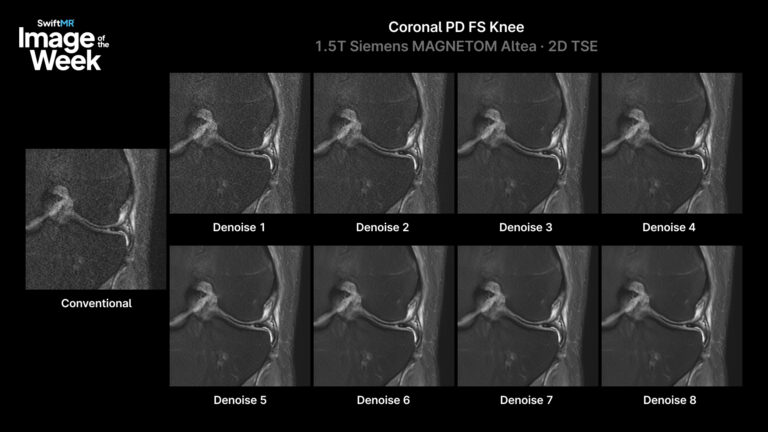
SwiftMR: 8 Tunable Denoising Levels for Knee MRI on Siemens Altea 1.5T
Eight Denoising Levels: What Changes—and What Doesn’t?
There is no single definition of a good MRI image.
Resolution, contrast, noise, and texture...
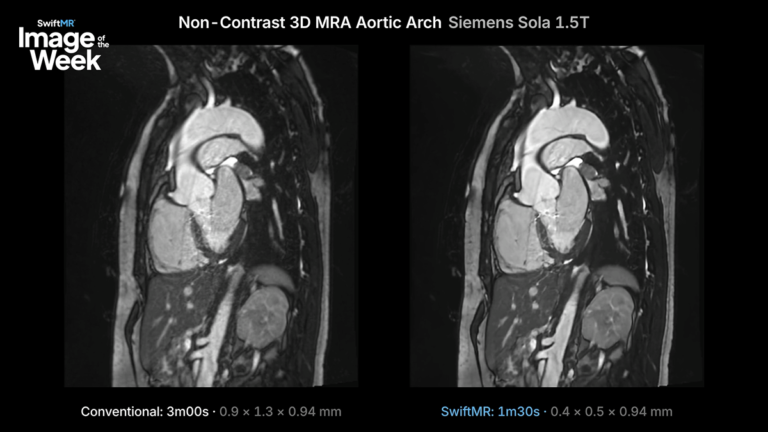
SwiftMR 50% Faster Non-Contrast 3D Aortic Arch MRA
3:00 → 1:30: Accelerating Non-Contrast 3D Aortic Arch MRA with Deep Learning Reconstruction
Non-contrast 3D MRA of the aortic arch can add valuable anatomical...
Scanner Spotlight: SwiftMR for Siemens MAGNETOM Skyra 3T
Hospitals and diagnostic imaging centers evaluating SwiftMR for Skyra 3T scanners are usually after the same three things: more clinical capacity, more...
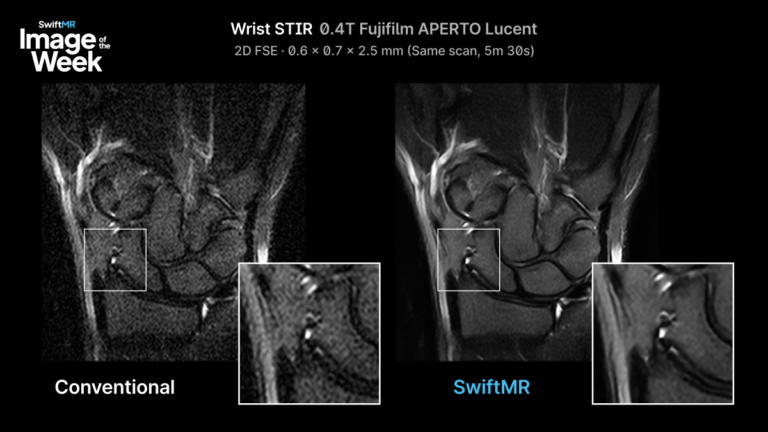
Improving Wrist STIR on a 0.4T Open MRI
A low-field wrist STIR MRI had a signal problem. The solution didn't require a higher-field scanner.

FDA-Cleared: Auto Cut MIPs for Head MRA with SwiftMR®
Save technologist time, deliver standardized vessel views to radiologists, and streamline imaging operations from acquisition to PACS.
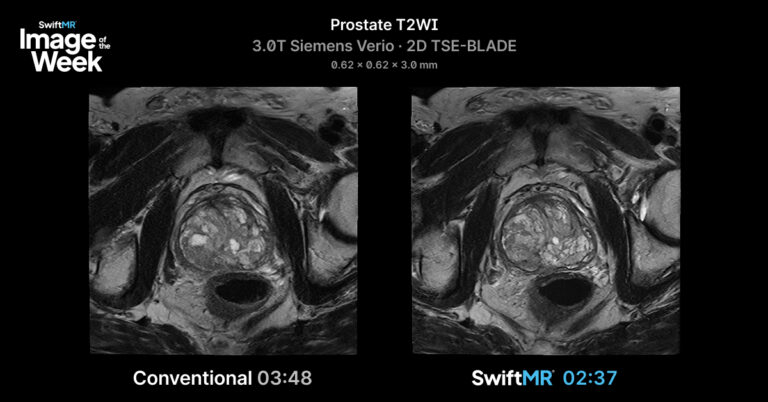
Prostate T2-Weighted Imaging in 31% Less Time
On a 3T Siemens Verio, SwiftMR cut a prostate T2 scan from 3:48 to 2:37 – 31% faster, but at the same resolution. Less time on the table means less chance...
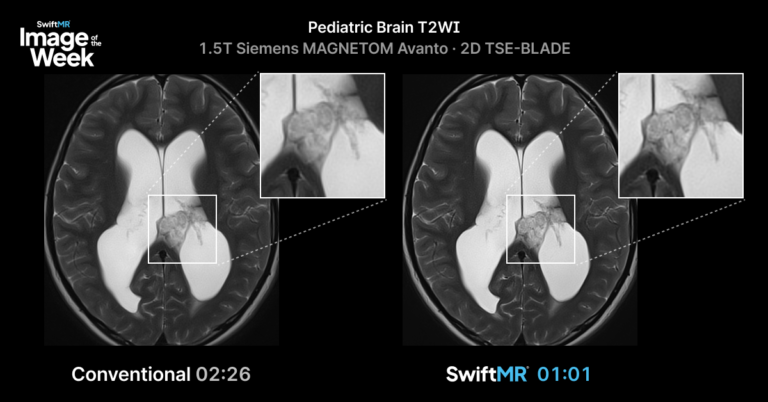
Pediatric Brain T2WI MRI: Evaluating a 58% Shorter Acquisition with SwiftMR
In pediatric MRI, every minute on the table matters.
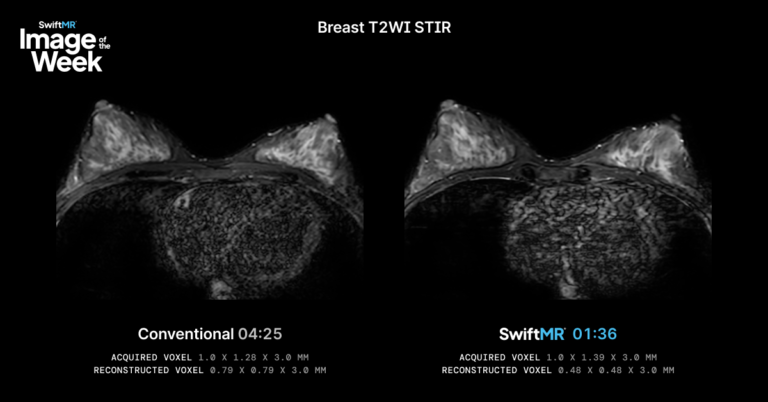
Breast T2WI STIR MRI: Evaluating Accelerated Acquisition with SwiftMR
Breast MRI requires image quality, patient cooperation, and consistency across sequences. In prone positioning, longer acquisitions can increase the opportunity...
How SwiftMR Extends OEM DL Beyond Current Limitations
Discover how OEM DL reconstruction and SwiftMR work together to deliver broader MRI image quality and acceleration benefits.
SwiftMR for Hitachi Open MRI Systems: AIRIS 0.3T & OASIS 1.2T
SwiftMR helps Hitachi AIRIS 0.3T and OASIS 1.2T open MRI systems reduce scan times, improve image quality, and increase scanner capacity without new hardware....
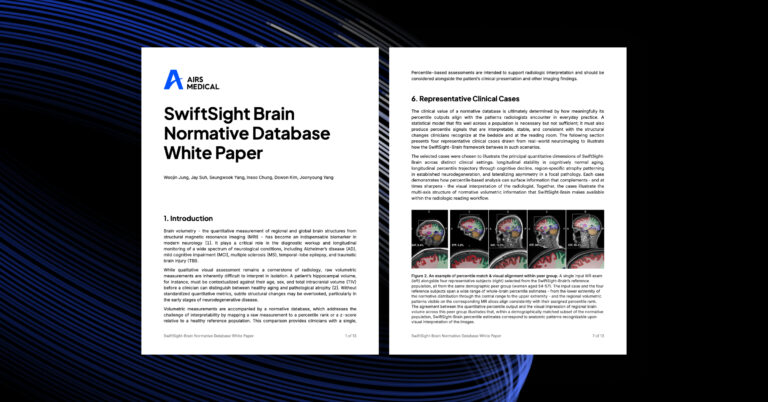
SwiftSight-Brain Normative Database for Quantitative Brain MRI
Now updated with the world’s largest normative database in quantitative brain MRI, built from 32,615 subjects across vendors, field strengths, and international...
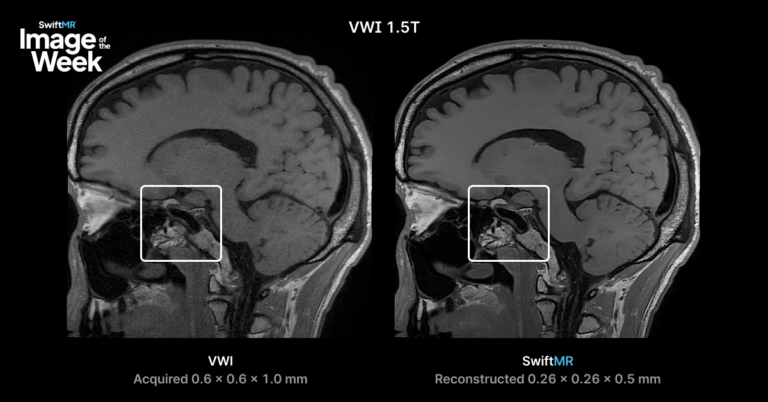
1.5T Vessel Wall Imaging: Evaluating Reconstructed Detail
Intracranial vessel wall imaging is technically demanding. The vessel wall is small, adjacent blood signal must be suppressed, and image quality depends...
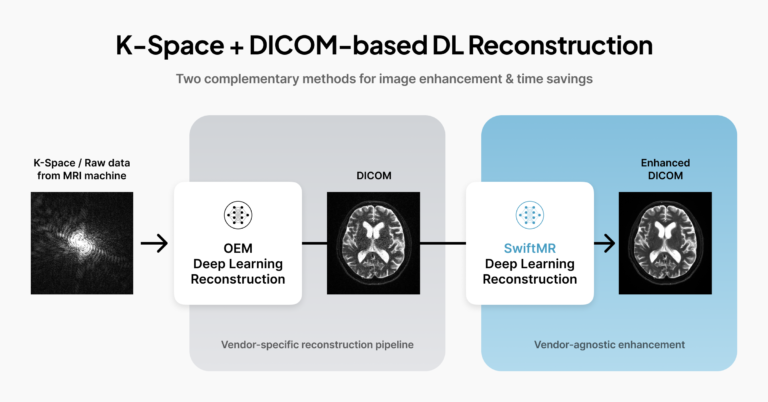
7 Ways SwiftMR Improves OEM DL Reconstruction for Radiology Practices
OEM deep learning reconstruction has changed what MRI teams can expect from accelerated imaging.
By improving reconstruction within the scanner pipeline,...
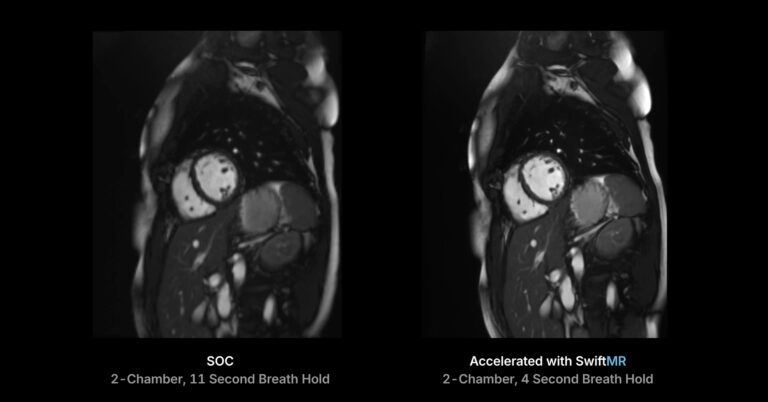
AI-Accelerated Cardiac MRI: 69% Faster Short-Axis Cine With SwiftMR
Cardiac MRI has never been more clinically important — or more operationally demanding.