For imaging centers using Hitachi open MRI systems, the opportunity is not a new scanner. It is getting more performance, predictability, and financial value from the scanner already in place.
But open MRI systems also come with technical and operational trade-offs. Because lower-field scanners generate less signal than standard 1.5T or 3T closed-bore systems, lower signal-to-noise ratio can make it harder to capture high-resolution images, especially for small anatomy, fine soft-tissue detail, or complex neurological findings.
To compensate, protocols may require longer acquisition times. Longer scans can make appointment slots less predictable, reduce daily scanner capacity, increase the risk of patient motion, and raise the chance of image degradation or repeat imaging.
For Hitachi AIRIS 0.3T, these challenges are more pronounced because of its low-field design: lower SNR can limit image detail and contribute to longer scan times across routine neuro and musculoskeletal exams.
For Hitachi OASIS 1.2T, the challenge is different. As a higher-field open MRI system, it offers stronger performance than very low-field open MRI while preserving the comfort benefits of an open design. But compared with standard 1.5T closed-bore systems, its field strength and open architecture can still create trade-offs in signal, scan time, and image definition for certain high-detail applications.
For imaging teams, the challenge is twofold.
For executives and operational decision leaders, the question is how to make Hitachi open MRI systems more productive, more predictable, and more financially valuable without replacing the scanner.
For radiologists, the question is whether scan time can be reduced while preserving image quality and diagnostic confidence.
SwiftMR on Hitachi AIRIS 0.3T Scanner
For East River Medical Imaging, the goal was clear: improve the clinical and operational value of the Hitachi AIRIS ELITE 0.3T already in place.
After implementing SwiftMR®, East River Medical Imaging significantly reduced scan times across neuro and musculoskeletal protocols.
Hitachi AIRIS ELITE 0.3 Tesla — Before & After Integration
| Protocol | Before SwiftMR | After SwiftMR | Scan Time Reduction |
|---|---|---|---|
| Neuro | |||
| L-Spine | 35:07 | 19:14 | 45% |
| T-Spine | 56:27 | 32:22 | 43% |
| C-Spine | 56:25 | 33:00 | 42% |
| Orbits | 43:19 | 29:55 | 31% |
| Pituitary | 33:08 | 25:38 | 23% |
| Brain | 38:57 | 32:05 | 18% |
| Soft Tissue Neck | 45:03 | 37:02 | 18% |
| Sacrum | 43:25 | 36:22 | 16% |
| IAC’s | 34:16 | 28:50 | 16% |
| MSK | |||
| Knee | 39:54 | 24:42 | 38% |
| Shoulder | 40:08 | 28:55 | 28% |
| Hip | 54:12 | 42:35 | 21% |
| Pelvis | 45:32 | 39:46 | 13% |
| Female Pelvis | 59:59 | 51:55 | 13% |
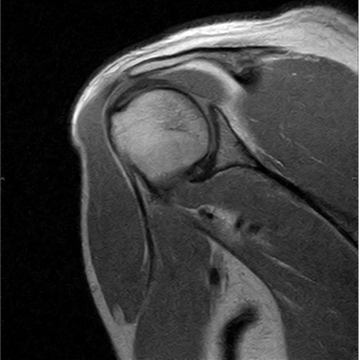
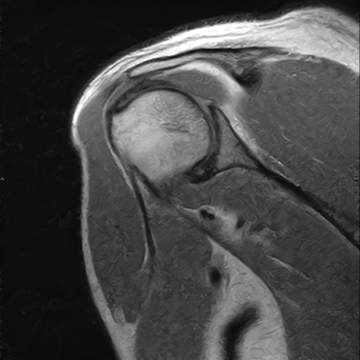
SwiftMR also demonstrated a 56% faster scan for a Coronal PD Shoulder exam by reducing scan time from 4:00 to 1:46.
Coronal PD Shoulder · Hitachi AIRIS ELITE 0.3T
Operational, clinical and patient benefits
The operational impact was significant.
With SwiftMR, East River Medical Imaging increased MRI scan volume from 16 to 24 patients in an 8-hour window. That represents 8 additional patients per day from the same scanner capacity.
For imaging leaders, that can create meaningful financial value without replacing the scanner, adding staff, or extending operating hours. Depending on reimbursement, those additional patient slots can translate into hundreds of thousands — and potentially more than $1 million — in annual revenue opportunity.
The clinical value was equally important.
By reducing scan times while improving image quality, SwiftMR helped support clearer images from accelerated acquisitions and reduce the risk of motion-related image degradation.
For patients with claustrophobia, anxiety, pain, or difficulty remaining still, shorter exams can make MRI more tolerable and easier to complete.
The workflow impact extended to staff as well. Shorter, more predictable exams helped East River stay on schedule, reduce disruption from late arrivals or patient movement, and give technologists more breathing room between studies. Their team also reported improved patient and technologist satisfaction, with faster scans helping reduce stress on both sides of the glass.
SwiftMR on Hitachi OASIS 1.2T
The Hitachi OASIS 1.2T is a higher-field open MRI system used by imaging centers that need to support patients who benefit from a more accessible scanning environment, including patients with claustrophobia, larger body habitus, mobility challenges, or difficulty tolerating a conventional closed-bore exam.
For these sites, the opportunity is not scanner replacement. It is optimization.
Even when an open MRI scanner is already performing well, scan time still affects daily workflow. Longer or variable exams can make appointment slots harder to standardize, reduce schedule flexibility, and limit how many patients can be scanned in a normal operating day.
SwiftMR® helps address this by reducing scan time while supporting image quality from accelerated acquisitions.
Across Hitachi OASIS 1.2T data, SwiftMR demonstrated an average scan time reduction of 42% across multiple protocols. Reported reductions included:
| Protocol | Before SwiftMR | After SwiftMR | Scan Time Reduction |
|---|---|---|---|
| Brain W/WO | 13:50 | 10:51 | 22% |
| Brain & Orbits | 46:10 | 27:41 | 40% |
| Brain & IAC | 37:46 | 28:42 | 25% |
| Brain & Pituitary | 41:21 | 28:05 | 32% |
| TMJ | 19:37 | 10:55 | 44% |
| Soft Tissue Neck | 36:45 | 19:49 | 46% |
| C-Spine W/O | 18:44 | 10:09 | 45% |
| T-Spine W/O | 34:33 | 21:17 | 39% |
| L-Spine W/O | 20:28 | 15:49 | 23% |
| Foot | 36:44 | 19:12 | 48% |
| Shoulder | 19:56 | 10:50 | 46% |
| Ankle | 19:03 | 8:55 | 53% |
| Prostate | 58:41 | 31:11 | 47% |
Clinical image examples also show SwiftMR applied to lumbar spine imaging on Hitachi OASIS 1.2T. In the examples provided, T2 axial L-Spine was reduced from 4:20 to 3:43, while T1 sagittal L-Spine was reduced from 3:46 to 2:50.
For OASIS 1.2T sites, the value is not only faster individual exams. It is better schedule control.
Shorter scan times can help imaging centers create more consistent appointment slots, reduce scheduling gaps, increase scanner availability, improve patient flow throughout the day, and support higher throughput potential and stronger financial performance from the scanner already in place.
For radiologists, the value is maintaining confidence in image quality while reducing scan time. SwiftMR supports clearer images from accelerated acquisitions by reducing image noise and improving image sharpness.
For patients, especially those who rely on open MRI because of claustrophobia, pain, mobility limitations, or body habitus, shorter exams mean less time in the scanner and a more tolerable imaging experience.
Clinical, operational, and patient benefits
On Hitachi OASIS 1.2T, SwiftMR® demonstrated an average scan time reduction of 42% across multiple protocols. In practical terms, that means the scan portion of the exam takes approximately 58% of its original acquisition time.
For imaging leaders, that reduction creates meaningful capacity. In an 8-hour schedule, a site using 30-minute appointment slots can typically accommodate 16 patients per day. With shorter scan times, those slots may be reduced closer to 20 minutes, creating the potential to scan up to 24 patients per day.
That represents 8 additional patients per day, or a potential 50% increase in daily MRI scan volume, without adding staff, extending operating hours, or replacing the scanner.
The operational value is not just faster exams. It is better schedule control. Shorter, more consistent scan times can help imaging centers reduce scheduling gaps, improve appointment predictability, increase scanner availability, and generate more financial value from the OASIS system already in place.
The clinical value is equally important. SwiftMR helps reduce image noise and improve image sharpness from accelerated acquisitions, supporting shorter scan times while helping radiologists maintain confidence in the images being reviewed.
For patients, shorter exams mean less time in the scanner. This is especially important for patients who rely on open MRI because of claustrophobia, pain, mobility limitations, larger body habitus, or difficulty remaining still.
For technologists, more predictable exams can reduce schedule pressure, limit downstream disruption, and create more breathing room in the daily workflow.
Frequently Asked Customer Questions
What problem does SwiftMR solve on Hitachi AIRIS ELITE 0.3T?
For Hitachi AIRIS ELITE 0.3T, the main challenge is the low-field trade-off: lower SNR, longer scan times, and greater risk of motion-related image degradation.
SwiftMR helps address this by reducing image noise, improving image sharpness, and shortening scan times across routine neuro and musculoskeletal protocols.
At East River Medical Imaging, SwiftMR reduced scan times across multiple AIRIS ELITE 0.3T protocols, including L-Spine, T-Spine, C-Spine, Knee, Orbits, and Shoulder exams.
What scan-time reductions were seen on Hitachi AIRIS ELITE 0.3T?
At East River Medical Imaging, SwiftMR reduced scan times across neuro and musculoskeletal protocols on the Hitachi AIRIS ELITE 0.3T, including:
| Protocol | Before SwiftMR | After SwiftMR | Scan Time Reduction |
|---|---|---|---|
| L-Spine | 35:07 | 19:14 | 45% |
| T-Spine | 56:27 | 32:22 | 43% |
| C-Spine | 56:25 | 33:00 | 42% |
| Knee | 39:54 | 24:42 | 38% |
| Orbits | 43:19 | 29:55 | 31% |
| Shoulder | 40:08 | 28:55 | 28% |
SwiftMR also demonstrated a 56% faster Coronal PD Shoulder scan on Hitachi AIRIS ELITE 0.3T, reducing scan time from 4:00 to 1:46.
What problem does SwiftMR solve on Hitachi OASIS 1.2T?
For Hitachi OASIS 1.2T, the challenge is often scan-time consistency, appointment predictability, and daily scanner utilization.
SwiftMR helps OASIS 1.2T sites reduce scan times while supporting image quality from accelerated acquisitions. This can help imaging centers create more predictable appointment slots, improve scheduling flexibility, and increase scanner availability across the day.
What scan-time reductions on average can be attained with SwiftMR on a Hitachi OASIS 1.2T?
Across Hitachi OASIS 1.2T data from multiple imaging sites, including OpenSided MRI of Denver, RAYUS Radiology, New Rochelle, and Naugatuck Valley Radiology, SwiftMR demonstrated an average scan time reduction of 42%.
For OASIS sites, the value is not only faster exams. The larger operational benefit is more predictable scheduling and better use of open MRI capacity.
Does SwiftMR require a new Hitachi scanner or hardware upgrade?
No new scanner hardware is required. SwiftMR is a software-based MRI reconstruction and enhancement solution designed to help imaging centers improve performance from existing scanner infrastructure.
For Hitachi open MRI sites, this means SwiftMR can support improved scan time and image quality without requiring immediate scanner replacement.
Which protocols and anatomies are supported on Hitachi AIRIS ELITE 0.3T?
In the East River Medical Imaging example, SwiftMR was used across neuro and musculoskeletal protocols on Hitachi AIRIS ELITE 0.3T.
Reported examples included L-Spine, T-Spine, C-Spine, Knee, Orbits, and Shoulder exams.
Supported protocols should always be reviewed with AIRS Medical based on the site’s scanner configuration, protocol mix, and clinical requirements.
How does SwiftMR help imaging operations teams?
For MRI managers and imaging operations teams, the value is schedule control.
Shorter scan times can help make appointment slots more predictable, reduce delays, open additional availability, and improve daily scanner utilization. At East River Medical Imaging, SwiftMR helped increase MRI scan volume from 16 to 24 patients in an 8-hour window, creating 8 additional patient slots per day from existing scanner capacity.
How does SwiftMR support radiologists?
For radiologists, the key question is whether scan time can be reduced while preserving image quality and diagnostic confidence.
SwiftMR supports this by reducing image noise and improving image sharpness from accelerated acquisitions. On Hitachi open MRI systems, this is especially important because shorter scans must still produce images radiologists can trust for clinical interpretation.
How does SwiftMR help patients using open MRI scanners?
Open MRI systems are often used for patients who experience claustrophobia, anxiety, pain, mobility limitations, or difficulty tolerating closed-bore MRI exams.
By reducing scan time, SwiftMR can help patients spend less time in the scanner. Shorter exams may improve comfort, reduce the likelihood of patient movement, and make MRI easier to complete for patients who already face barriers to imaging.
How does SwiftMR help technologists and staff?
Shorter, more predictable exams can reduce schedule pressure on technologists. When scans run closer to schedule, staff spend less time managing delays, frustrated patients, and workflow disruption.
At East River Medical Imaging, shorter scans helped improve patient experience and gave technologists more breathing room between studies.
What is the financial value of SwiftMR on Hitachi open MRI systems?
The financial value comes from increasing scanner capacity without replacing the system, adding staff, or extending operating hours.
At East River Medical Imaging, SwiftMR helped increase MRI scan volume from 16 to 24 patients in an 8-hour window. That represents 8 additional patient slots per day from existing scanner capacity.
Depending on reimbursement, those additional slots can translate into significant annual revenue opportunity while also improving patient access and workflow efficiency.
How should imaging centers evaluate SwiftMR for their Hitachi scanner?
Imaging centers should evaluate SwiftMR based on scanner model, protocol mix, current scan times, image quality requirements, scheduling constraints, and business goals.
For Hitachi AIRIS ELITE 0.3T, the evaluation should focus on reducing low-field scan-time and image-quality trade-offs.
For Hitachi OASIS 1.2T, the evaluation should focus on improving schedule predictability, scanner utilization, and throughput potential while maintaining image quality.
SwiftMR: Making Hitachi Open MRI Systems Work Harder
Hitachi open MRI systems continue to play an important role for imaging centers that need to serve patients who may not tolerate conventional closed-bore MRI exams. But for these scanners to remain clinically and financially valuable, they also need to support efficient schedules, reliable image quality, and predictable daily workflow.
SwiftMR solves that challenge.
On Hitachi AIRIS ELITE 0.3T, SwiftMR demonstrated meaningful scan-time reductions across neuro and musculoskeletal protocols, helping improve the performance of a low-field open MRI system already in place. On Hitachi OASIS 1.2T, SwiftMR supports faster, more predictable exams that can help imaging teams improve scanner utilization while preserving the comfort benefits of open MRI.
For imaging leaders, the value is greater productivity and revenue opportunity from existing scanner infrastructure. For radiologists, the value is reducing scan time while supporting image quality and diagnostic confidence. For technologists and patients, the value is a more predictable, less stressful MRI experience.
The takeaway is simple: improving MRI performance does not always require replacing the scanner.
For Hitachi open MRI sites, SwiftMR offers a practical software-based path to reduce scan times, improve image quality, and get more value from the systems already serving patients every day.
Evaluate SwiftMR for your Hitachi MRI system. Get in touch for a conversation or demo.