MRI AI: How to Generate More Revenue from Your MRI Scanner
Create usable capacity, improve capital productivity, and build a more consistent MRI strategy across your network.
Financial Inefficiencies Across a Mixed Scanner Fleet
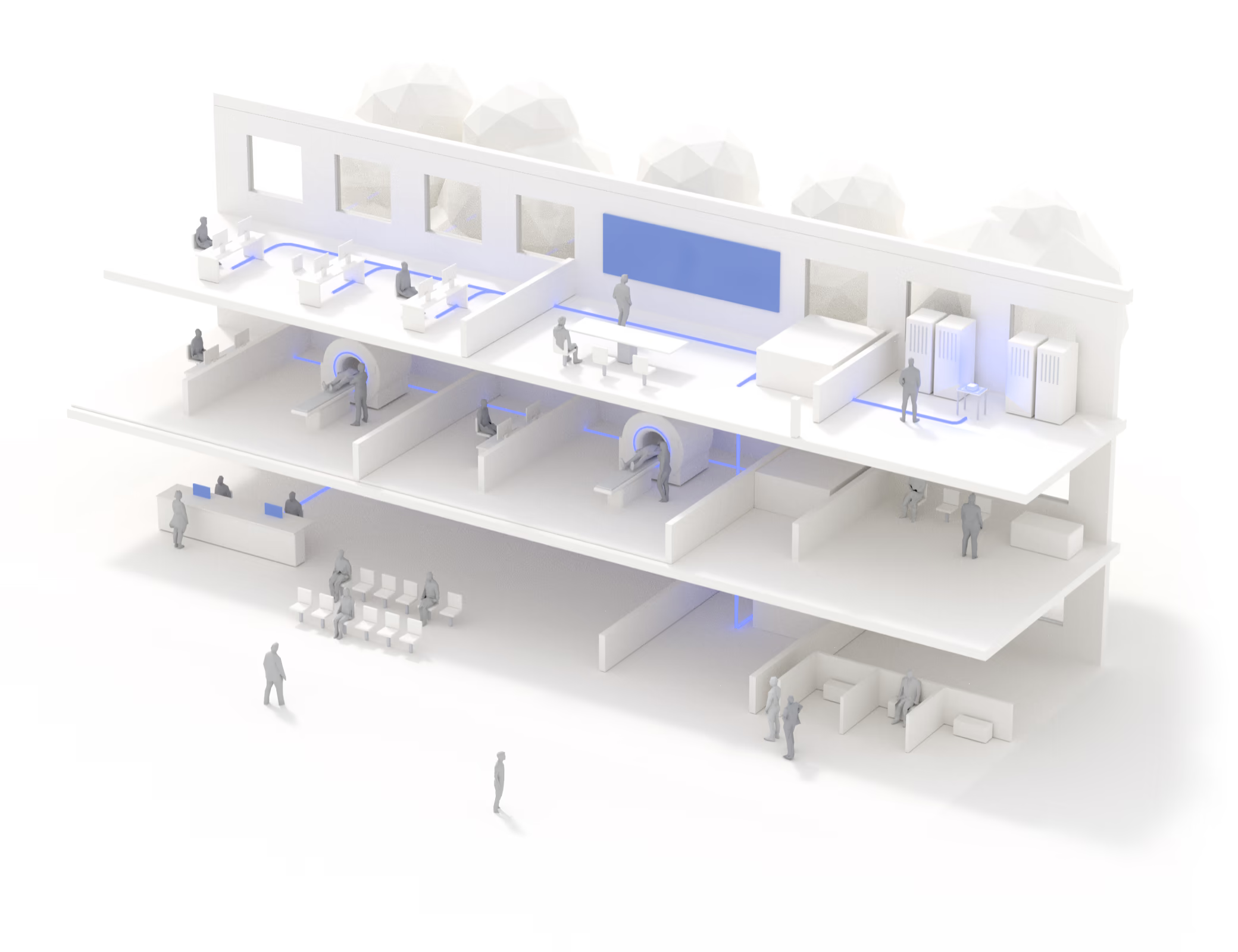
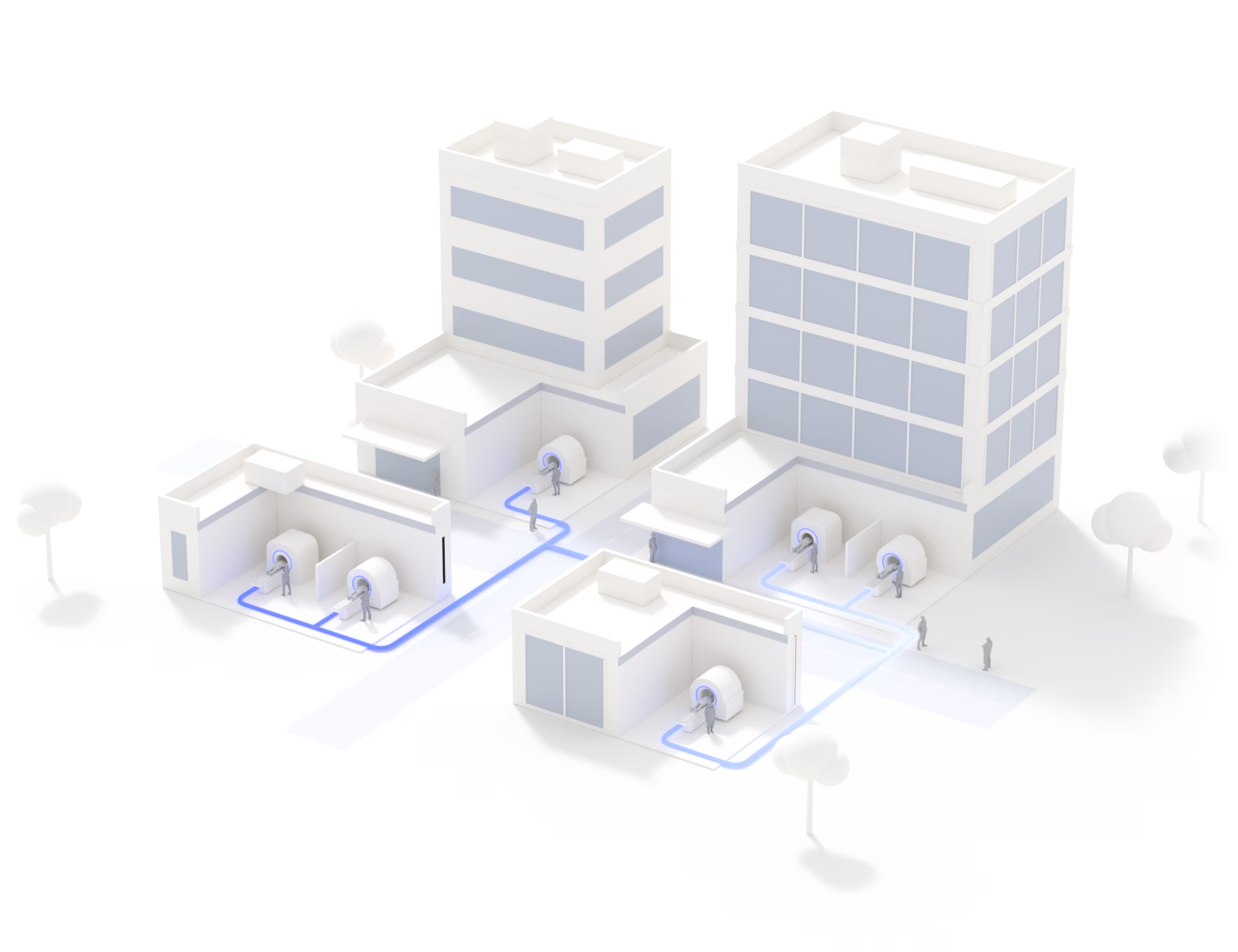
Enterprise imaging organizations operate mixed MRI environments across hospitals, outpatient centers, and acquired sites — with different manufacturers, scanner generations, field strengths, software levels, and existing AI investments.
That variation creates real financial inefficiency:
- 1 Unused capacity
- 2 Higher staffing and operating costs
- 3 Premature upgrade or replacement spend
- 4 Fragmented technology investments
- 5 Capital deployed sooner than necessary
200+ MRI Scanners. Multiple Technologies. One Enterprise Approach.
SimonMed Evaluated the Market for an Enterprise Solution
SimonMed was already experienced in evaluating and deploying AI across its organization. When it assessed MRI acceleration and image-enhancement platforms, the technology needed to meet more than a scanner-level performance test.
It had to work at enterprise scale.
SimonMed evaluated major solutions against requirements that included:
- Performance across multiple MRI manufacturers
- Compatibility across field strengths
- Support for both newer and legacy scanners
- Ability to work alongside existing OEM deep-learning reconstruction
- High image quality across all body parts and protocols
- Deployment without new scanner hardware or scanner software upgrades
- Scalability across a national imaging network
What distinguished SwiftMR® was its ability to meet these requirements as a single enterprise solution — delivering consistent performance across SimonMed’s diverse MRI fleet without requiring a scanner-by-scanner hardware or OEM software upgrade strategy.
“We rigorously evaluated every major solution in the market, and this was a clear decision.”
Sean Raj, MD Chief Medical Officer and Chief Innovation Officer, SimonMed Imaging
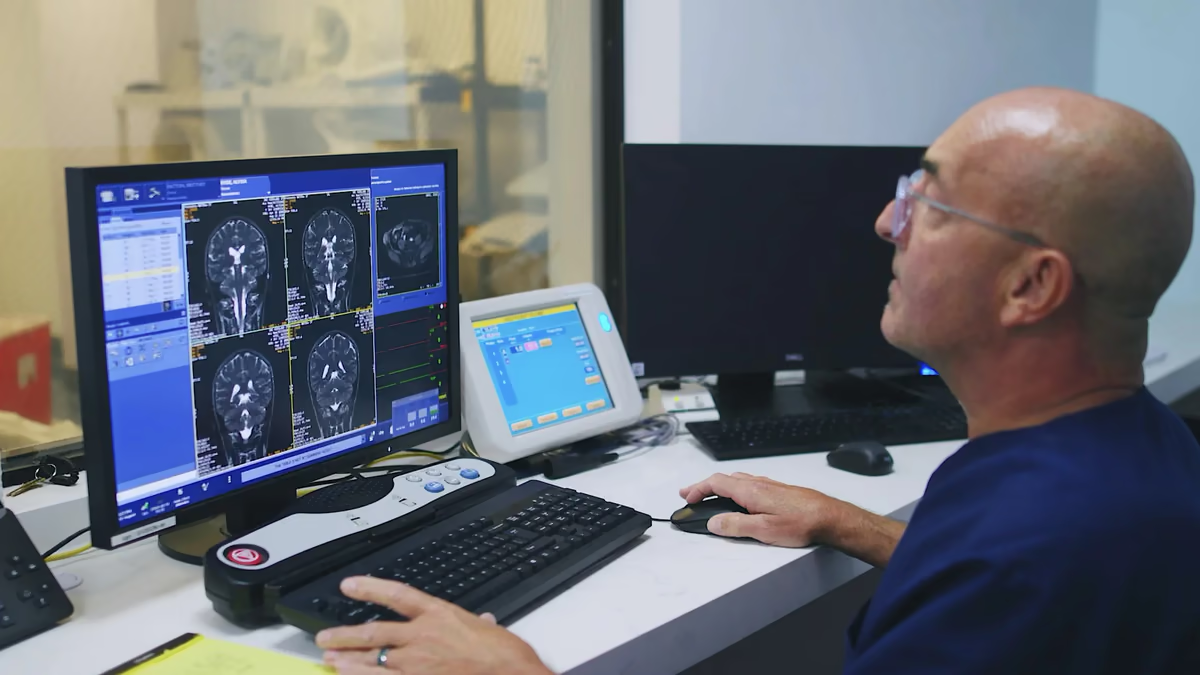
SimonMed Imaging center
From Decision to Enterprise-Wide Deployment in 10 Days
Once SimonMed selected SwiftMR, the organization moved 200+ MRI scanners across its network to SwiftMR in just 10 days.
No new scanner hardware was required. SimonMed deployed across the MRI infrastructure it already owned rather than approaching the transformation scanner by scanner.
- MRI scanners
- 200+
- Deployment
- 10 days
- States
- 10
- Vendor fleet
- Mixed
See Why SimonMed Chose SwiftMR
Manage MRI Performance Across the Enterprise
Capacity
Create more usable capacity from existing MRI assets.
Capital productivity
Get more value from infrastructure already in place.
Consistency
Reduce variation across sites, scanners, and technology generations.
Growth
Support additional volume and new clinical opportunities.
Proven Business Value
Customer-specific results. Individual results may vary.
$1.5M+ New-scanner investment avoided
Invision Sally Jobe made its existing scanners faster instead of buying a new one, lifting patient throughput 29% across three locations.
30–40% Scan-time reduction
MedStar Georgetown clinically validated SwiftMR across hospital and outpatient environments, enabling shorter appointment slots.
+42% MRI scan volume
3T Radiology & Research reported 30–50% average scan-time reduction, a 42% increase in scan volume, growth from 30 to 40 patients per day, and positive ROI within the first two months.
Enterprise TCO
Compare the 3–5 Year Cost of Improving MRI Performance
The question isn’t what the AI costs. It’s the most economically efficient way to achieve the MRI performance your organization needs.
Evaluate the economics of four paths
- Path 1 Current state
- Path 2 OEM upgrades
- Path 3 Additional equipment
- Path 4 Enterprise AI
Model total cost, payback, capital avoided or deferred, and usable capacity created using your own fleet and operating assumptions.
One Performance Strategy Across the MRI Fleet You Already Own
Large health systems may never create a uniform MRI fleet through capital replacement alone. An enterprise approach has to operate across the infrastructure already in place:
- Multiple manufacturers
- Different scanner generations
- 1.5T and 3T systems
- Different software levels
- Hospital and outpatient environments
- Existing OEM AI investments
The objective is not to make every scanner identical. It is to create a more consistent MRI performance strategy across the network.
Protect the AI Investments You Already Have
Build around the technology you already own — not around what you would have to replace.
Enterprise MRI AI rarely starts from zero.
Some scanners may already have OEM deep-learning reconstruction. Others may not. Coverage can also vary by scanner generation, sequence, anatomy, and software version.
SwiftMR is FDA-cleared to work with OEM deep-learning MRI solutions, allowing organizations to evaluate where AIRS can complement existing technology, extend coverage, and deliver additional performance rather than automatically replacing investments already made.
AIRS customer examples include SwiftMR operating alongside both GE AIR Recon DL and Siemens Deep Resolve.
From MRI Performance to MRI Intelligence
Improving acquisition performance is one part of the opportunity. The MRI data created across the network can also become a source of objective, quantitative information.
SwiftSight extends the AIRS platform beyond image enhancement into quantitative MRI and longitudinal assessment.
SwiftSight-Brain
Measures each brain structure on a routine MRI, compares it with a normative database of 32,615 adults, and tracks change between scans. Results stay consistent across manufacturers and field strengths, so every site in a mixed fleet can offer the same neuro reporting, from atrophy to MS.
Body Composition
Turns a scan of under five minutes into a new service line. One report covers muscle, visceral and subcutaneous fat, muscle fat infiltration, and liver fat, compared with an age- and sex-matched population. It runs on your existing MRI, with no new modality or workflow.
Better MRI performance creates capacity. Quantitative MRI creates another layer of value.
Build the Evidence Before You Scale
Enterprise MRI AI should answer a business question — not simply prove that the software works.
Step 1: Understand
Know what to evaluate and what evidence to require.
Step 2: Quantify
Identify where better MRI performance can create the most meaningful enterprise value.
Step 3: Model
Compare the 3–5 year economics of the current state, OEM upgrades, additional equipment, and enterprise AI.
Step 4: Prove
Enterprise MRI Performance Evaluation
Evaluate representative scanners, protocols, and environments against predefined clinical, technical, operational, and financial success criteria.
Step 5: Decide
Customer-owned business case
Translate measured performance into your organization’s own capacity, capital, clinical, and financial context.
Step 6: Scale
Enterprise rollout
Expand when the clinical, technical, operational, and financial evidence supports broader deployment.
MRI Fleet Opportunity Review
Find the Highest-Value Opportunity Inside Your MRI Network
The MRI Fleet Opportunity Review is designed to determine where better MRI performance or quantitative imaging could materially affect the organization.
Fleet + utilization
Scanner mix, volumes, appointment structures, utilization, wait times, and capacity.
Existing technology
OEM deep-learning reconstruction and other AI already deployed across the fleet.
Capital plan
Planned scanner purchases, upgrades, and replacement cycles.
A preliminary comparison of current state, OEM upgrades, additional equipment, and enterprise AI.
Evaluation design
The scanners, protocols, and environments that should be used to test the business case.
Your Fleet. Your Demand. Your Economics. Your Decision.
Build the evidence before you make the investment.