The Enterprise MRI Forum
One MRI Standard. Across the Enterprise.
Join AIRS Medical, imaging executives, radiologists, and clinical innovators for a series of conversations exploring one of the biggest challenges facing enterprise MRI: how do you create more capacity, consistency, and clinical intelligence across a heterogeneous MRI fleet, without replacing the infrastructure you already own?
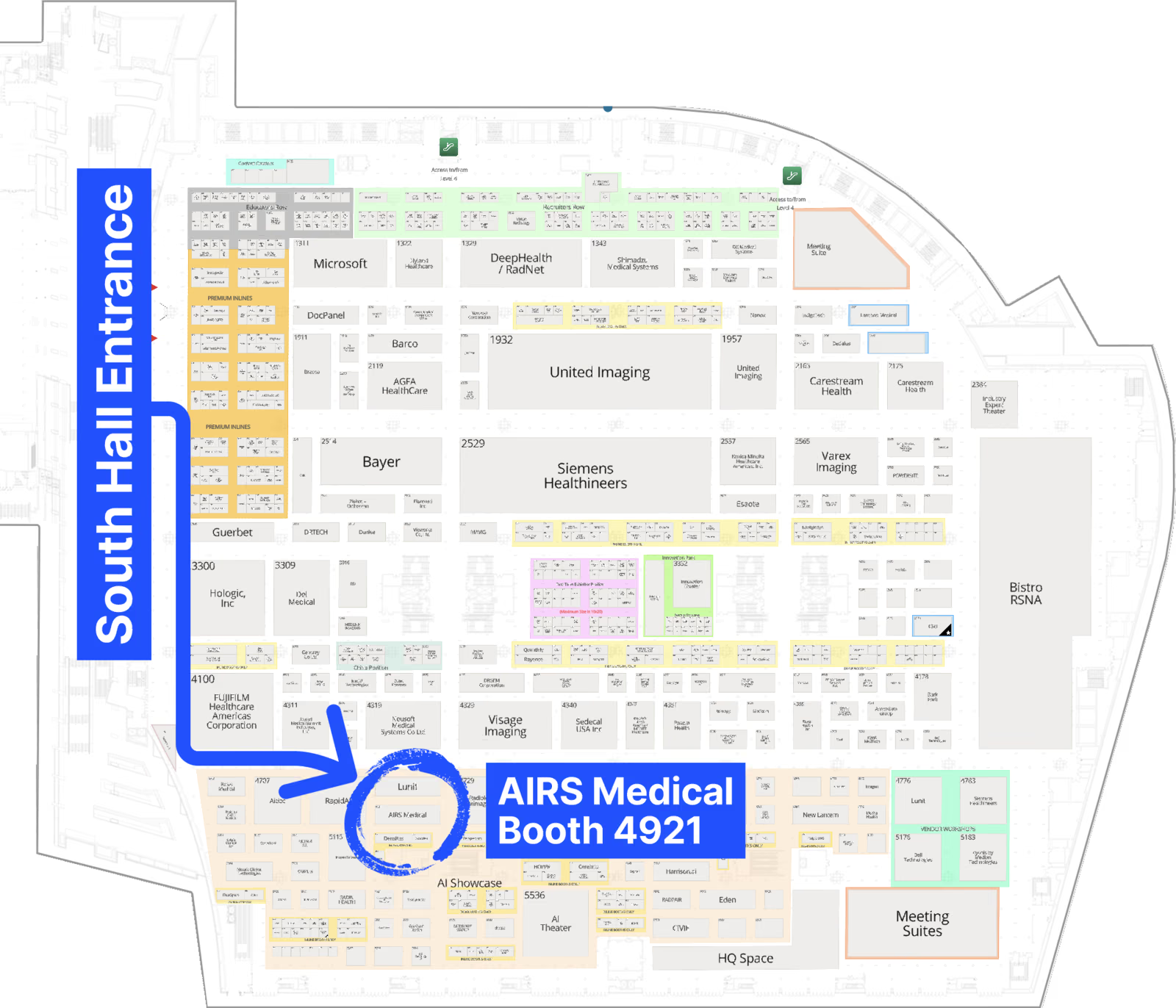
November 29 – December 3, 2026·Booth 4921, South Hall L3·McCormick Place, Chicago
What We're Exploring at RSNA
Across five days, explore enterprise MRI standardization, OEM AI, longitudinal imaging, quantitative brain health, body composition, and the next generation of MRI intelligence.
Capacity
How can health systems create additional MRI capacity from the fleet they already own?
Standardization
How do you establish one imaging standard across vendors, field strengths, scanner generations, and locations?
Capital Efficiency
Where can AI extend the useful value of existing MRI infrastructure and complement OEM investments?
Longitudinal Imaging
How do you know whether a measured change comes from the patient, or from the scanner?
MRI Intelligence
What becomes possible when imaging moves from image enhancement to quantification, tracking, and predictive insight?
Three Sessions, One Enterprise MRI Story
Hear from leaders at SimonMed, HOPPR, and 3T Radiology & Research as they share how they are reshaping MRI strategy across their organizations. Select a session to see the details.
One MRI Standard Across 200+ Sites: How SimonMed Built the Foundation for Longitudinal Imaging
Ajit Shankaranarayanan, PhD, AIRS Medical
How do you standardize MRI across a network when every scanner is different?
Large imaging networks operate heterogeneous MRI fleets spanning different manufacturers, field strengths, scanner generations, acquisition protocols, and increasingly, different OEM deep learning reconstruction technologies. That variability is a critical issue because patients move across locations and scanners over time. A change seen from one exam to the next may reflect the scanner or acquisition rather than the patient, weakening the value of longitudinal comparison. Networks are left either trying to return patients to the same scanner for every follow-up or accepting variation they cannot fully explain. For longitudinal imaging to work at enterprise scale, a patient's scans must remain meaningfully comparable regardless of where acquired.
For an enterprise network like SimonMed, this challenge goes beyond image quality. Patients may be scanned at one location this year and another next year on a different MRI system. Requiring return to the same scanner limits network flexibility, while uncontrolled variation weakens longitudinal comparison.
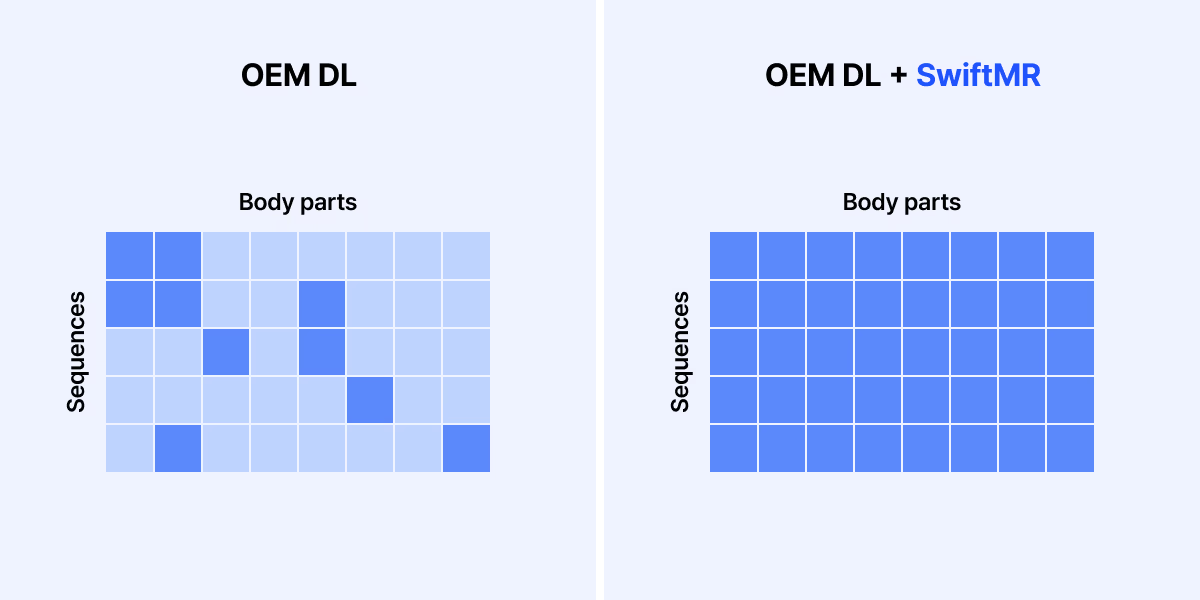
SimonMed approached SwiftMR not as a site-by-site acceleration tool, but as an enterprise imaging layer across its 200+ locations. Vendor-neutral SwiftMR can operate across older and newer scanners and alongside OEM deep learning reconstruction, to create a more consistent image-quality foundation while preserving existing MRI investments.
In this session, SimonMed and AIRS Medical will share practical considerations behind scaling this approach across a mixed MRI fleet: evaluating old and new scanners, working alongside existing OEM AI, establishing image-quality standards, radiologist sign-off, and deploying AI across an enterprise without requiring identical hardware at every site.
We will also examine what becomes possible once the network shares a more consistent imaging foundation. By reducing scanner- and acquisition-related variability, SwiftMR and SwiftSight support reliable quantitative and longitudinal comparison across visits, including when patients are imaged on different scanners or at different locations.
Attendees will leave with a practical framework for enterprise MRI AI adoption spanning fleet assessment, clinical validation, radiologist approval, mixed-technology deployment, and network-wide scalability and a view of how one imaging standard can support longitudinal care and future quantitative services such as brain health, body composition, and preventive imaging.
Enterprise MRI · Mixed fleets · OEM AI · Standardization · Longitudinal imaging
Beyond BMI
MRI Body Composition for Metabolic Health, Healthy Aging, and Preventive Imaging
Two patients of the same age and BMI can have very different health profiles.
One may carry high visceral fat with low muscle mass and significant muscle fat infiltration; another may have substantially more lean muscle and less metabolically active fat. Weight and BMI cannot distinguish between them — yet those differences matter for metabolic health, healthy aging, physical function, and how a patient responds to intervention.
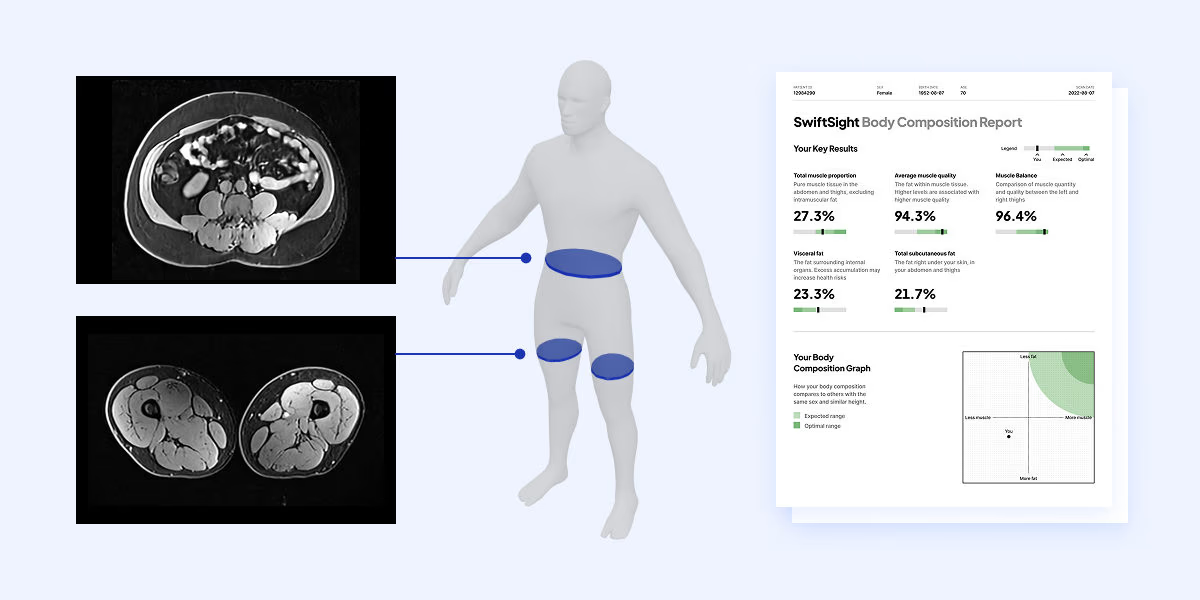
This session introduces SwiftSight Body Composition, an MRI-based quantitative analysis solution designed to look beyond weight and BMI by measuring the tissues that matter. From a single examination, SwiftSight assesses visceral and subcutaneous fat, abdominal and thigh muscle quantity, muscle fat infiltration, left-right asymmetry, and liver fat. Results are compared with age- and sex-matched reference populations and translated into an automated report that helps clinicians and patients understand where measurements fall relative to expected and optimal ranges.
Rather than treating body composition as a one-time snapshot, the session will explore how quantitative MRI can support longitudinal assessment — tracking changes in fat distribution, muscle quantity and quality, asymmetry, and liver fat as patients age or undergo lifestyle, medical, or therapeutic interventions. SwiftMR integration can accelerate acquisition and improve image quality, helping make repeat MRI assessment more practical within an imaging workflow.
Clinical applications will include metabolic health assessment beyond BMI, healthy aging and sarcopenia, weight-management and GLP-1 programs where preserving lean muscle matters, rehabilitation, and preventive imaging. The discussion will also show how quantitative results can be translated into patient-friendly reporting, including percentile-based interpretation and measures such as muscle age, fat distribution, muscle quality, and liver fat.
Attendees will leave with a clear view of how MRI body composition can evolve from an imaging measurement into a repeatable quantitative health service — supporting longitudinal care while giving imaging providers an opportunity to differentiate preventive and longevity programs, expand patient-facing services, and develop new revenue-generating service lines from MRI capacity they already have.
Body composition · Metabolic health · Healthy aging · Preventive imaging · New service lines
Measure the Patient, Not the Scanner
The Future of Longitudinal Brain MRI with SwiftSight-Brain
When a brain MRI measurement changes over time, did the patient change — or did the scanner?
For brain volumetry, that distinction determines whether serial imaging reflects meaningful structural change or variability introduced by differences in scanner manufacturer, field strength, acquisition, or image quality.
This session introduces FDA-cleared SwiftSight-Brain, AIRS Medical’s AI-powered brain quantification solution designed to support reproducible longitudinal assessment. SwiftMR and SwiftSight-Brain work as an integrated pipeline: SwiftMR first reduces noise and enhances image resolution, providing a more consistent imaging foundation; SwiftSight-Brain then performs detailed segmentation and volumetric analysis to generate objective quantitative measurements. AIRS positions this combination around consistency across scanner models and field strengths to support more reliable comparison over time.
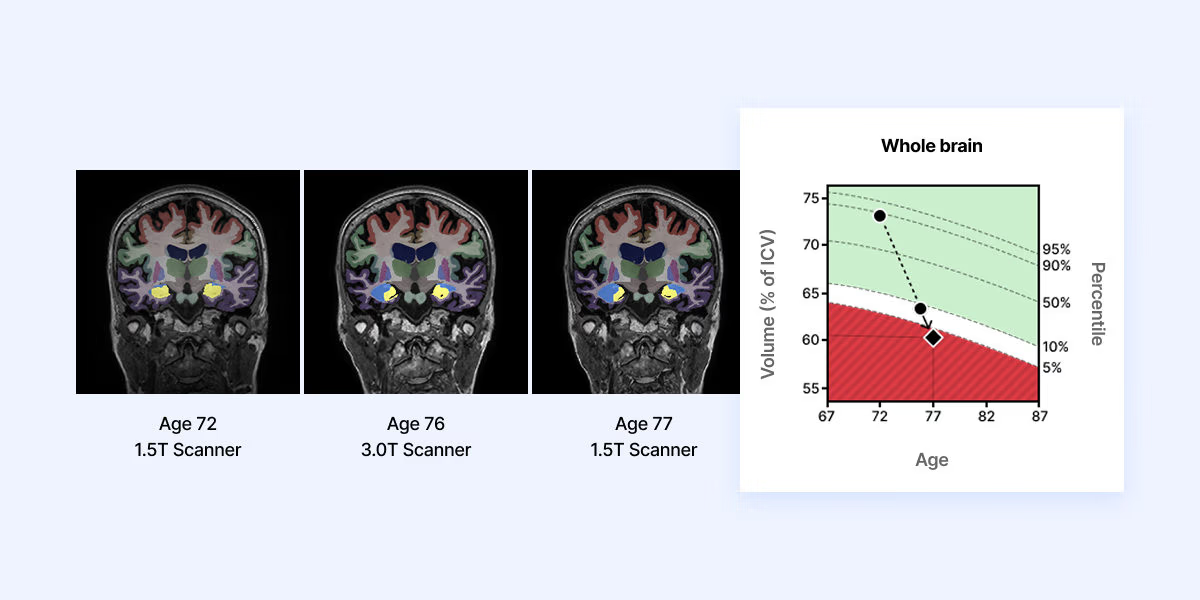
We will examine one of the central challenges in quantitative brain MRI: determining whether an apparent change reflects the patient or variability in the imaging process. Through cross-scanner, scan-rescan, and longitudinal examples, the session will explore how reducing scanner- and acquisition-related variability can improve the reproducibility of volumetric measurements and strengthen confidence in serial comparison.
The core of the session will be a series of clinical cases demonstrating how quantitative trajectories can add context beyond an isolated MRI. Cases will include multi-year tracking of whole-brain, hippocampal, temporal, and ventricular volumes; progression from cognitively normal to mild cognitive impairment and Alzheimer’s disease; and regional asymmetry that may reveal information not apparent from absolute volume alone.
These measurements are interpreted against the SwiftSight-Brain normative database of 32,615 adults aged 18 to 97, incorporating Siemens, GE, and Philips MRI data at both 1.5T and 3T. Age- and sex-adjusted percentile trajectories provide a reference for understanding whether an individual patient’s structural changes remain within expected variation or begin to diverge from the normative population.
Attendees will see how consistent reproducible quantification turns isolated brain MRIs into a reliable longitudinal brain health record, and what that consistency enables for early detection, treatment monitoring, and the next generation of preventive neuroimaging.
Brain health · Quantitative MRI · Longitudinal imaging · Reproducibility
What's New at RSNA 2026
One Enterprise Strategy for Both
See how FDA-cleared SwiftMR can work alongside OEM deep learning reconstruction, extending AI capabilities across mixed MRI environments while providing additional scan-time savings in supported workflows.
OEM DL coexistence · Mixed-fleet deployment · Additional acceleration · Enterprise standardization
Experience quantitative brain MRI designed for longitudinal assessment, including advanced segmentation, volumetry, asymmetry analysis, and age- and sex-adjusted comparison.
SwiftSight-Brain's normative database includes 32,615 adults aged 18–97 and data from Siemens, GE, and Philips systems at both 1.5T and 3T.
Longitudinal tracking · Scanner consistency · Brain health · Quantitative MRI
Explore MRI-based measurement of visceral fat, subcutaneous fat, muscle quantity, muscle fat infiltration, asymmetry, and liver fat, and how these measurements can support metabolic health, healthy aging, preventive imaging, and longitudinal programs.
Metabolic health · Healthy aging · GLP-1 programs · Preventive imaging · New service lines
Visit Booth 4921
You don't need to attend a scheduled session to explore the enterprise MRI story. Throughout RSNA, meet with the AIRS Medical team for demonstrations and discussions.
South Hall L3 · November 29 – December 3
Enterprise Fleet Review
Explore how SwiftMR could fit across different vendors, field strengths, scanner generations, and existing OEM AI environments.
SwiftMR + OEM DL Demonstrations
See examples of SwiftMR working with MRI systems already using OEM deep learning reconstruction.
Longitudinal Brain Imaging
Review SwiftSight-Brain segmentation, volumetry, normative comparison, and longitudinal clinical cases.
MRI Body Composition
See how quantitative MRI can extend into metabolic health, healthy aging, and preventive services.
Enterprise Business Case
Discuss capacity, capital efficiency, standardization, workforce, and opportunities to generate greater value from existing MRI assets.
Who You'll Hear From at RSNA
One MRI Standard Across the Enterprise
AIRS Medical is building toward an MRI environment where the scanner is no longer the limiting factor. One imaging foundation can help an enterprise improve performance today while creating the infrastructure for longitudinal and quantitative imaging tomorrow.
Booth 4921 · South Hall L3 · November 29 – December 3 · Chicago
Meet AIRS Medical at RSNA 2026
Bring us your MRI challenges. Let's talk about how to increase capacity, standardize performance, work alongside existing OEM AI, and build the foundation for longitudinal MRI across the enterprise.
SwiftMR is FDA 510(k) cleared and CE MDR certified as an AI-Powered MRI Image Enhancement Solution. Results vary based on scanner model, field strength, and imaging protocol. © AIRS Medical Inc. All rights reserved.