How Naugatuck Valley Radiology increased throughput and team morale with SwiftMR
Four locations, three scanner brands, and no room left in the day
A million-dollar problem met a software answer
Benefits within the first 24 hours
Faster on every scanner, at every location
The team got time back, and patients noticed
Sequence by sequence, the images held up
Paid for itself in a quarter
One platform for your mixed fleet?
The Connecticut practice runs one AI platform across three MRI scanner brands, cut 90% of its patient time slots by 15 minutes or more, scans 35% more patients a day, and saw full ROI within a quarter.
Operations Manager Chris Beaulieu and Lead MRI Technologist Justin K on what changed at Naugatuck Valley Radiological Associates.
Naugatuck Valley Radiological Associates (NVRA) is a private outpatient imaging practice with four locations across three cities in central Connecticut, dotted along the I-84 corridor. Across those sites it runs three MRI scanners from three different manufacturers, and demand for all of them kept climbing. “In MR, the volume has gone through the roof,” said Operations Manager Chris Beaulieu. The nationwide staffing shortage, for radiologists and technologists alike, made it hard to keep up, and the practice’s referral community treats NVRA as its first call for urgent patients. “We like to say yes,” he said.
Saying yes was getting expensive. On a typical day, NVRA’s Southbury facility performed MRI scans on 12 to 18 patients, and reaching even those numbers was a stretch. Long waits frustrated patients and forced the site to stay open late. Staff worked overtime to meet demand, sometimes with one technologist covering two shifts. And every patient the site couldn’t accommodate meant timely care not provided, and earnings not realized.
We were always asking our techs to stay later… we needed a remedy for that.
Justin K, the site’s Lead MRI Technologist, has spent more than two decades at Southbury and felt the strain firsthand. “We had very busy schedules,” he reflected. “It was difficult sometimes to catch up.”
The pressure reached patients, too. Southbury serves a largely senior demographic, and lengthy protocols were hardest on the people least equipped for them. “It can take a little extra time,” Justin noted. “It can be difficult getting on and off the MRI table.”
There was typically a backlog and a rushed feeling.
Chris had seen MRI acceleration before. Six years earlier at RSNA, a friend brought him over to a console demo, but it was a full implementation that would have cost well over a million dollars. Buying speed with hardware was no more realistic now: “It would have cost us over $1 million to buy a new scanner, which wasn’t happening.” So he asked himself, “how can we maintain patient care while optimizing our time of service?”
He found the answer on a radiology forum: SwiftMR, an AI solution that shortens MRI scan times on the scanners a practice already owns. “We took a look at it and were immediately intrigued by the opportunity to reduce our scan times,” he commented. Because SwiftMR is vendor neutral, one platform could cover NVRA’s entire mixed fleet, with no separate investment for each brand. “We have three different MRI scanning vendors, so the fact that SwiftMR is vendor neutral made it a very easy decision for us,” Chris said.
The turning point for adopting SwiftMR was the opportunity to maintain our current hours of operation and increase our throughput.
The technologists were on board from the start. “Our team was optimistic,” Justin recalled. “We’ve always been at the forefront of adopting new technology.”
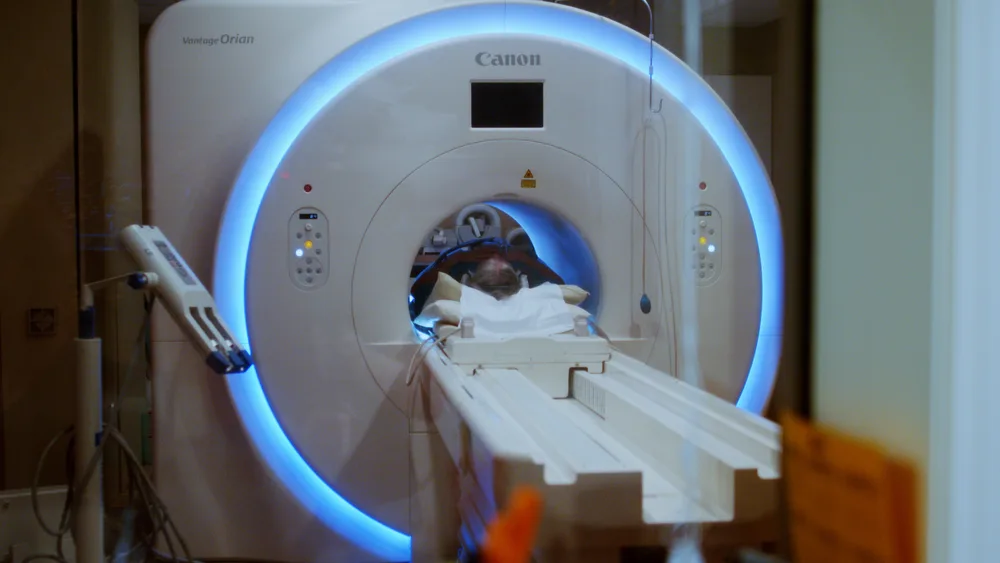
A patient in NVRA’s Canon Vantage Orion 1.5T, seen from the control room. SwiftMR runs on all three of the practice’s scanners, from three different manufacturers.
Patients scanned in a single day, a facility record
To see the effects of shorter scan times
Patient backlogs since introducing SwiftMR
Implementing new technology in a busy medical facility can be daunting. Instead, AIRS Medical’s engineers “worked around our staff with zero disruption to our patient flow,” Chris commented. “They perfected it.” The installation happened between scans on a normal working day. “We did not have to reschedule any patients,” Justin said. “We were able to do it in between scanning.” By the next morning, the team was already scanning with it.
The schedule changed almost as fast. “We immediately shortened the time slots for our two most popular scans, brain and knee, from 30 minutes to 15 minutes,” Justin remarked. A site that used to see 12 to 18 patients a day now handles 20 or more, set a facility record of 32 in a single day, and has had no patient backlogs since. “There are times when we’ve actually doubled our volume in a day,” Justin said.
I didn’t think it was possible to increase throughput without compromising image quality, but it is.
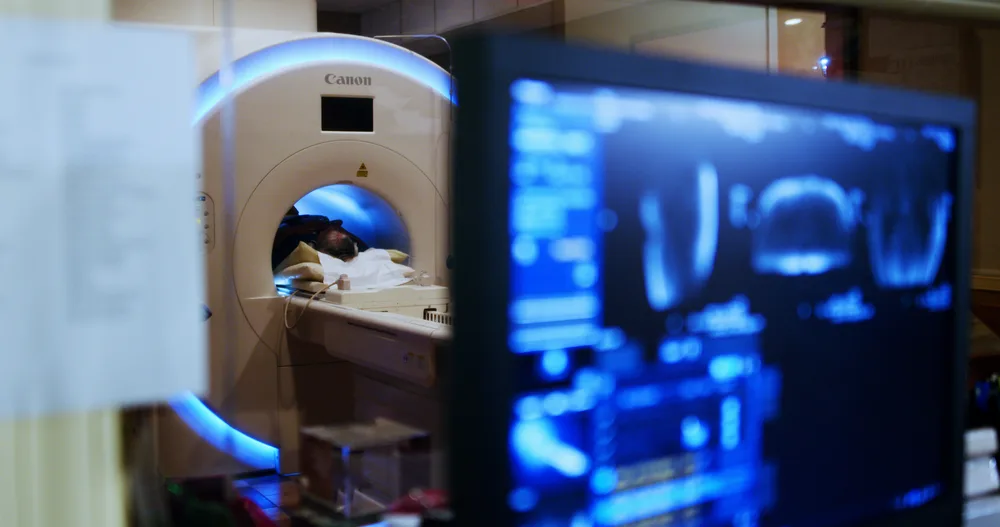
A scan in progress at NVRA’s Southbury facility, where the two most popular exams now run on 15-minute slots.
The gains were not confined to Southbury. NVRA extended SwiftMR to two more of its locations, putting it on all three of the practice’s scanners: a Hitachi Oasis 1.2T, a GE SignaHD 1.5T, and a Canon Vantage Orion 1.5T. SwiftMR fits into the existing route between each scanner and PACS, so by the time a patient is off the table, the processed images are already on the worklist, on every machine, regardless of vendor.
NVRA Southbury, measured scan times (min:sec)
Shorter scans meant shorter exams, and more patients scanned per day. When NVRA remeasured its appointment slots across the three scanners, the result was strikingly uniform: every exam type had shed 15 minutes, on the 1.2T Hitachi and the 1.5T GE and Canon alike.
Appointment time slots after SwiftMR, all three scanners
Slot times measured on the Hitachi Oasis 1.2T, GE SignaHD 1.5T, and Canon Vantage Orion 1.5T. Slots were identical across scanners for every exam type except foot, which ran 60 to 45 minutes on the Hitachi and 45 to 30 on the GE and Canon.
Abbreviations: w/o = without contrast; w/wo = with and without contrast.
Before SwiftMR, technologists often struggled to keep up with the demands of a packed schedule. “We do a lot of post processing and other types of paperwork,” Justin explained. Shorter acquisitions gave the team back control over its workflow. “Shorter scan times allow you to get back on schedule,” he said, and running on schedule, without the backlog and the rushed feeling, is what changed the mood of the department.
Patients picked up on the difference without being told. “We’ve had patients remark, unprovoked, how much quicker their scans were,” Chris said. “They’d ask, ‘how’d you get it done so fast?’” The shorter visits boosted patients’ confidence in the facility’s technology, and gave its most fragile patients less time to endure on the table.
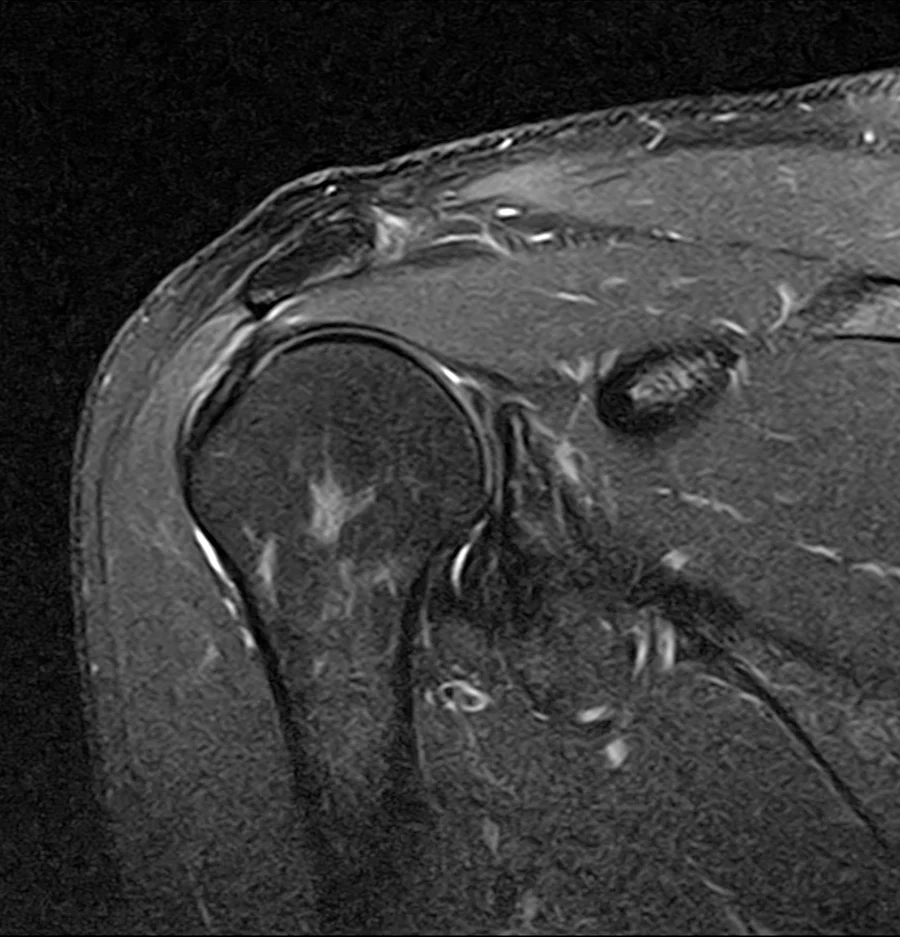
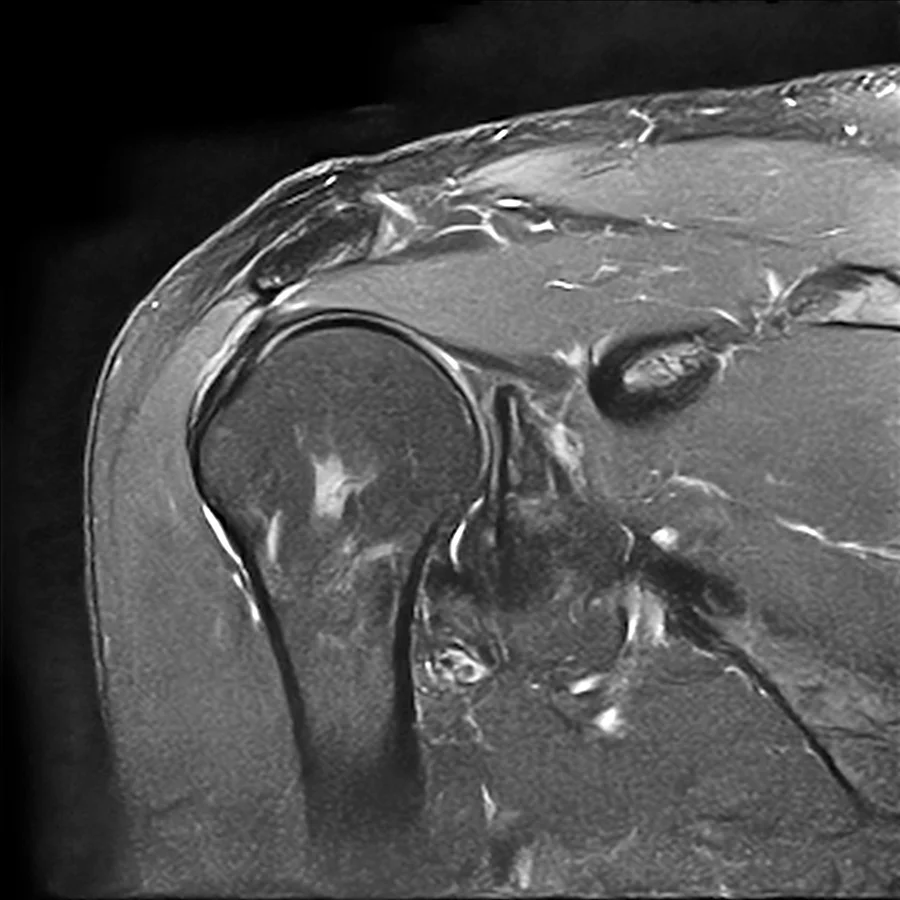
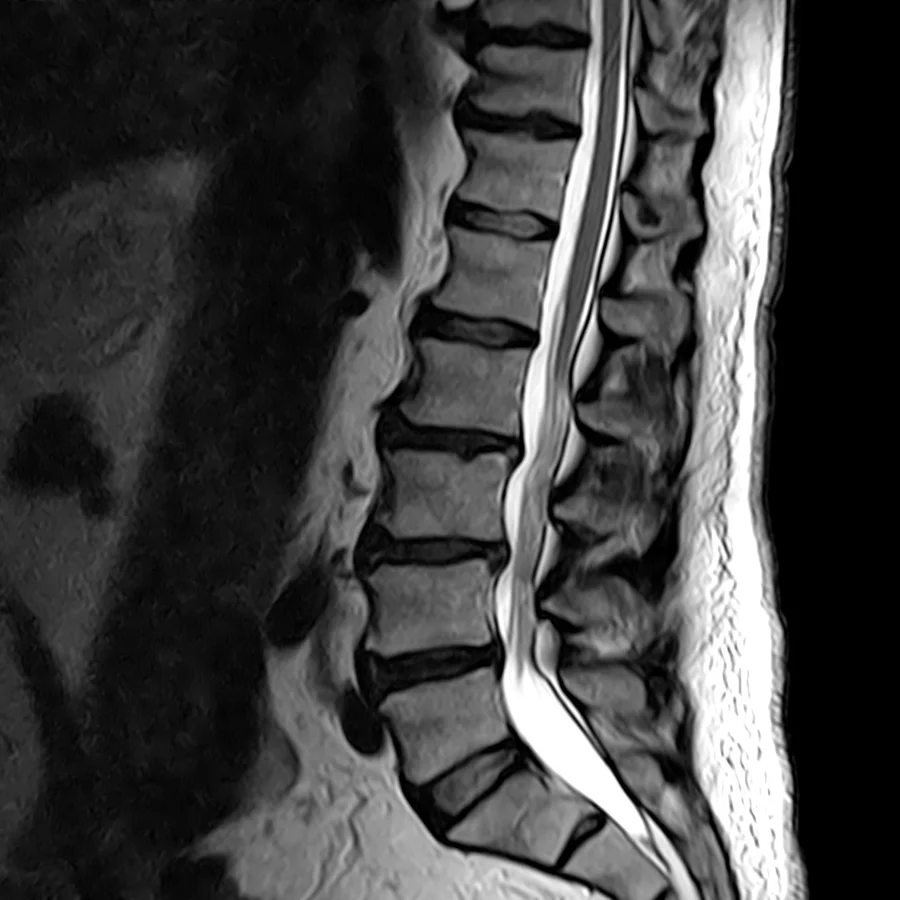
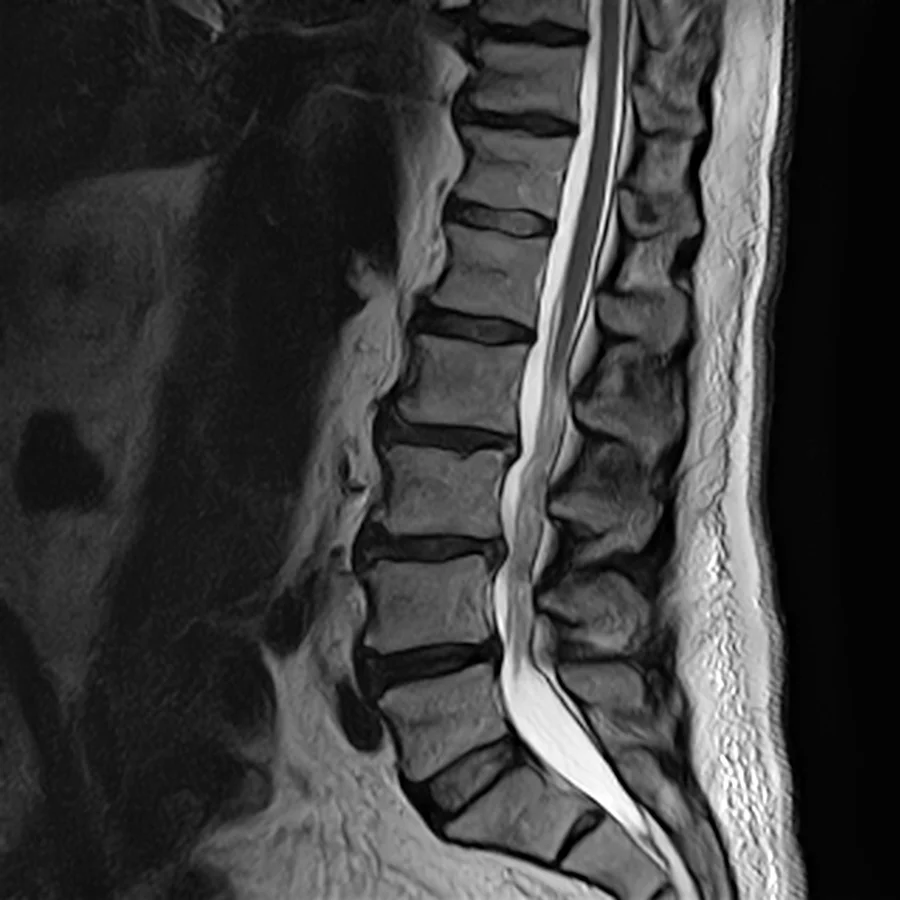
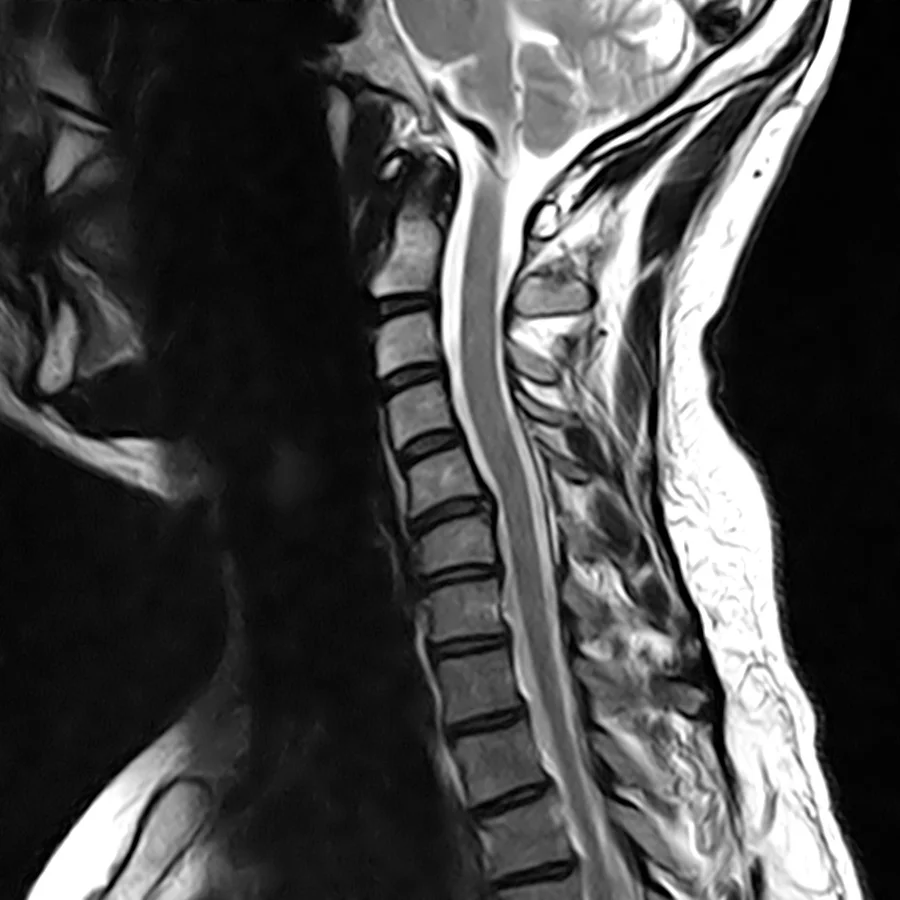
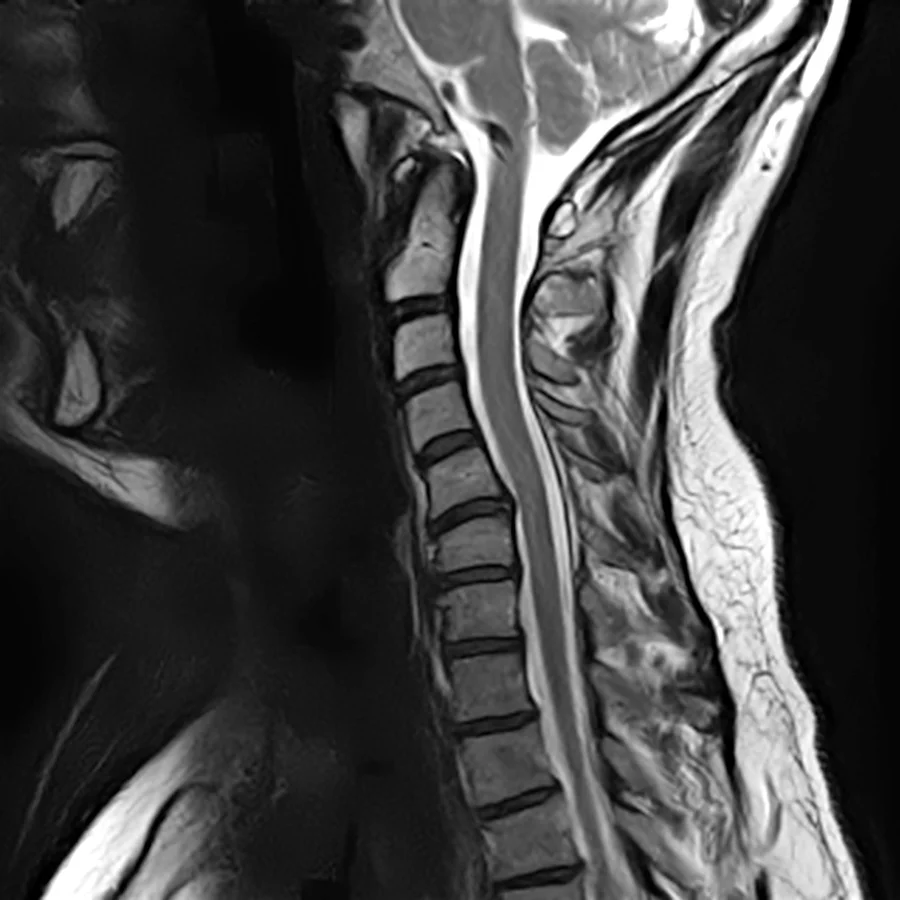
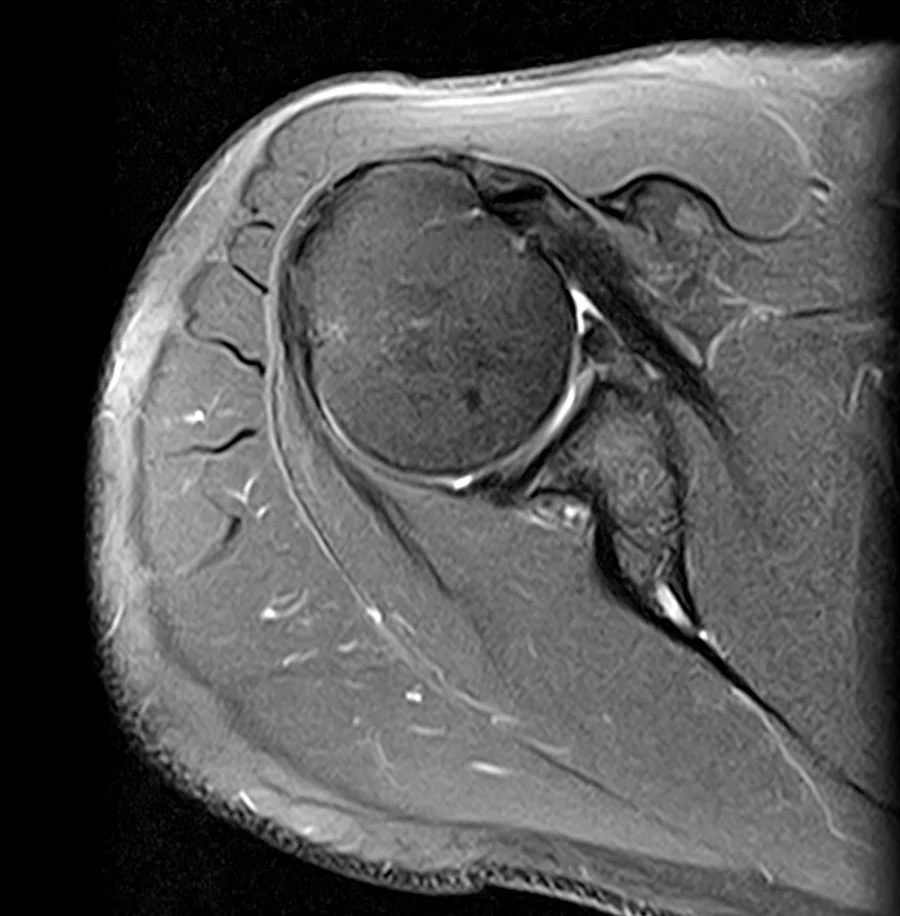
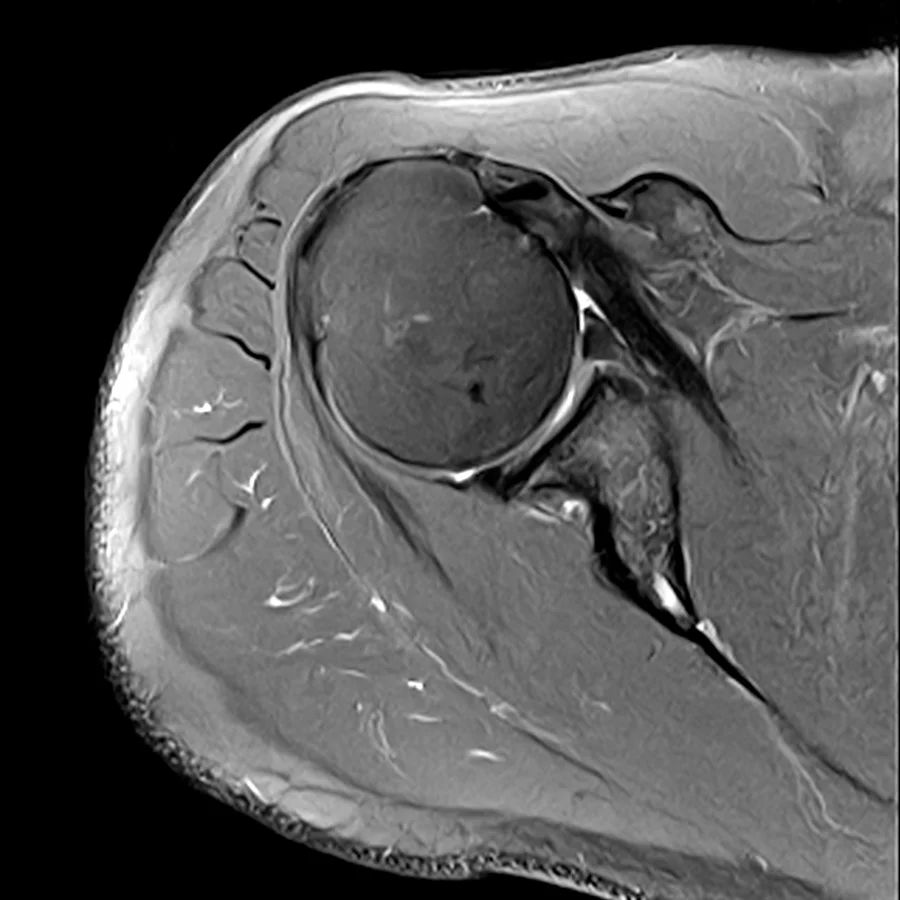
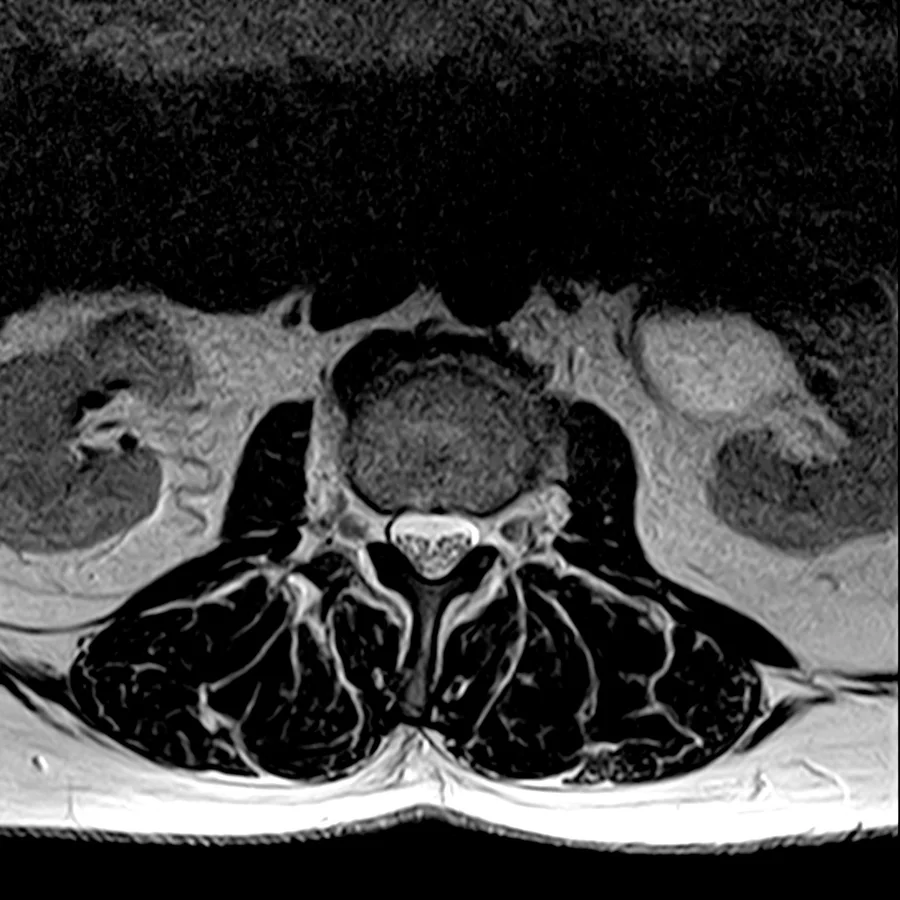
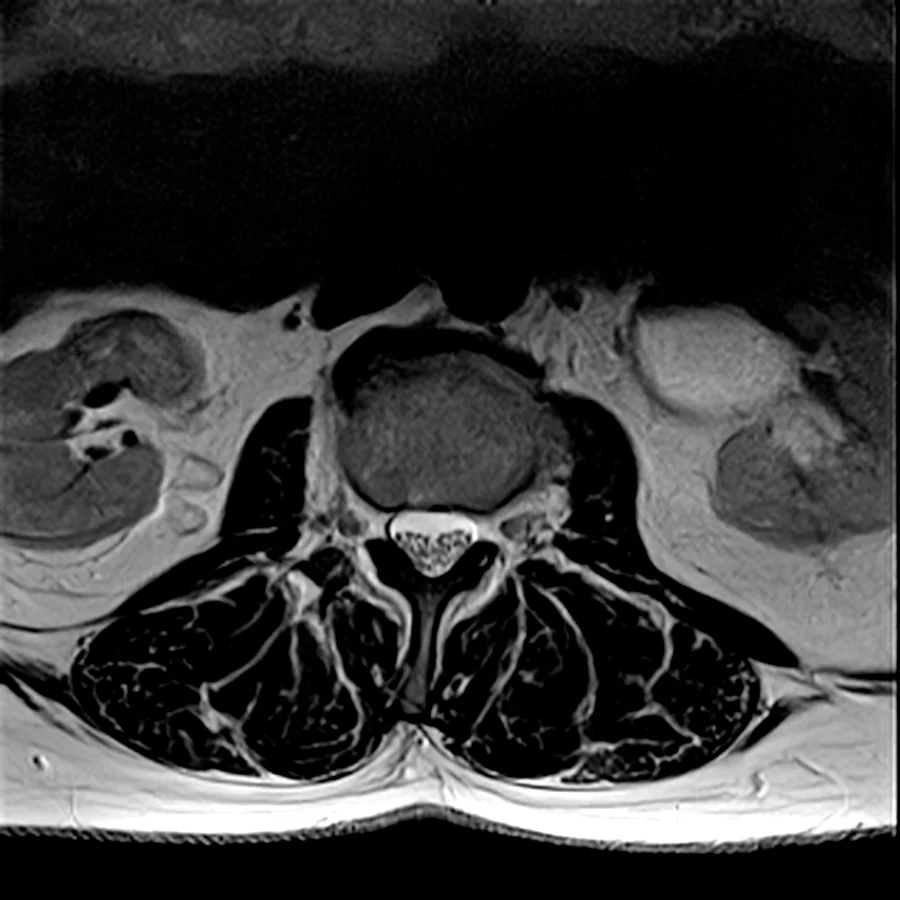
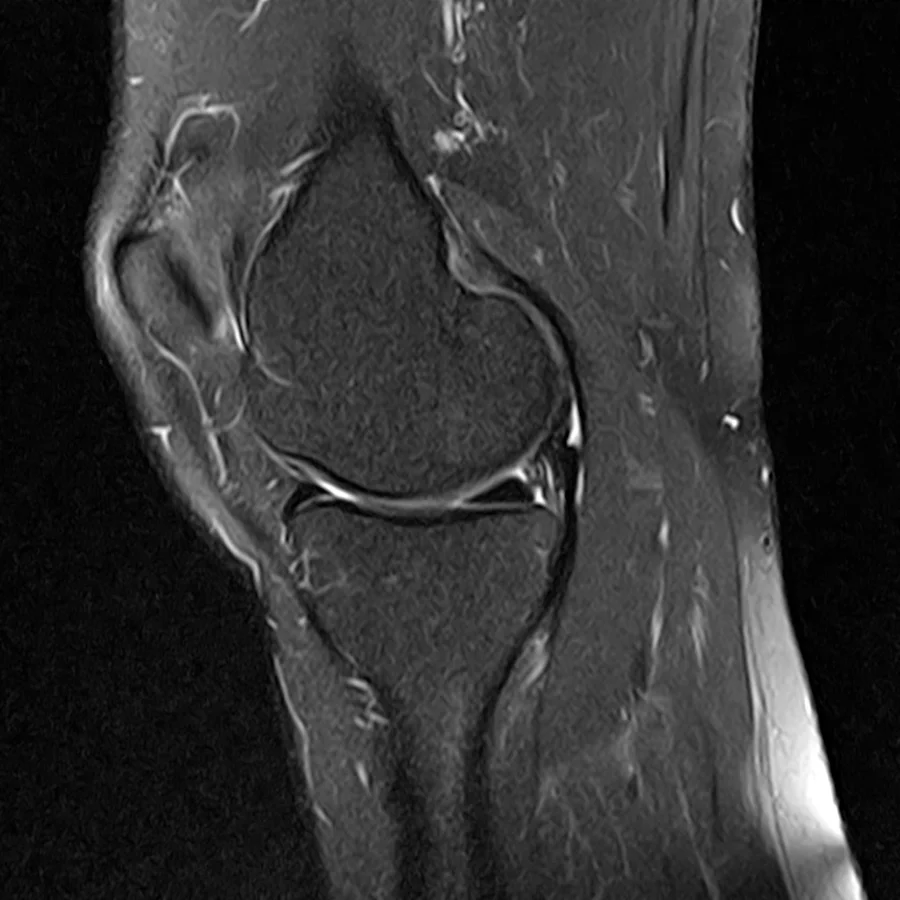
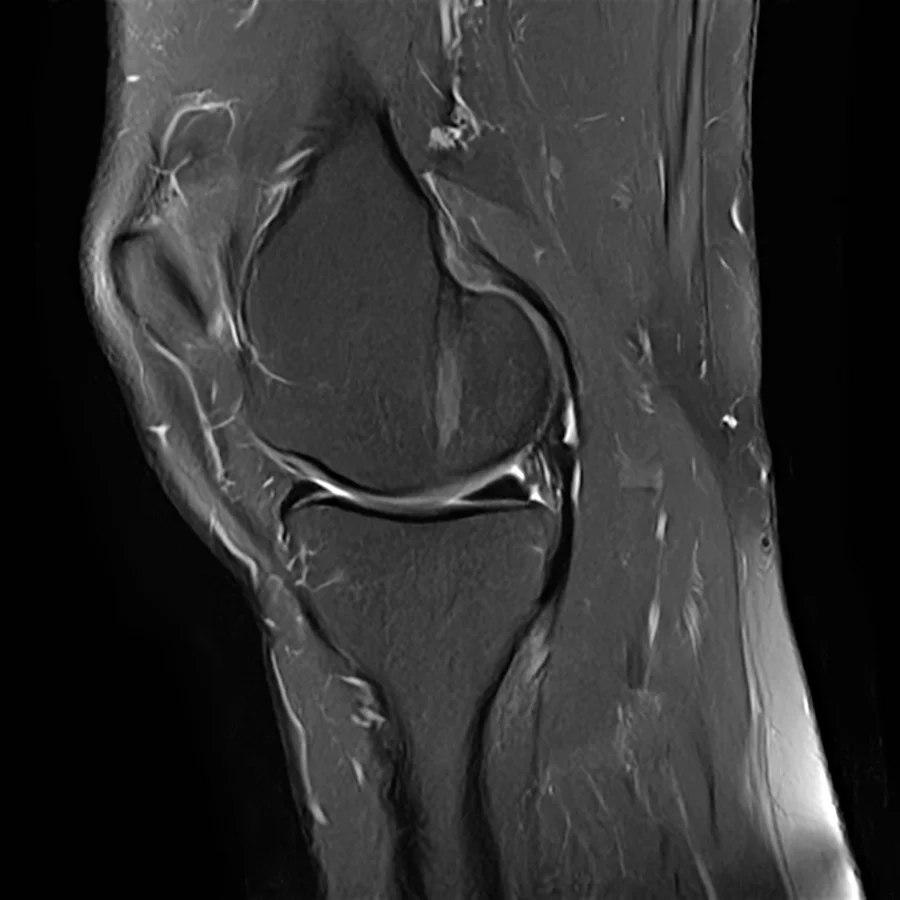
None of it would matter if image quality had slipped. It didn’t; the technologists’ first reaction was that the images looked better. The pairs below, from NVRA’s Canon Vantage Orion 1.5T, show the same sequences acquired conventionally and with SwiftMR.
Shoulder COR T2 FSAT · Canon Vantage Orion 1.5T64% faster
L-Spine SAG T2 · Canon Vantage Orion 1.5T63% faster
C-Spine SAG T2 · Canon Vantage Orion 1.5T62% faster
Shoulder AX PD FSAT · Canon Vantage Orion 1.5T43% faster
L-Spine AX T2 · Canon Vantage Orion 1.5T36% faster
Knee SAG T2 FSAT · Canon Vantage Orion 1.5T24% faster
Now scanning 20 or more patients a day at Southbury and generating significant additional revenue, NVRA recouped its SwiftMR investment within the first quarter of use. The million-dollar scanner purchase stayed unnecessary, the practice kept its hours of operation, and the team is confident in its ability to provide the highest level of care. “The product is very worthwhile in making the technologist aspect, the radiologist, and the business aspect very successful when it comes to MRI,” Justin said. “We’re very thankful here at NVRA to be able to provide the community with this great new advancement in imaging.”
For anyone out there who’s hesitant in implementing an AI product: don’t hesitate. SwiftMR is the answer.
What should radiology centers do? “Make that call swiftly,” Chris quipped.
SwiftMR runs on NVRA’s Hitachi, GE, and Canon scanners alike. Tell our team about your fleet and evaluate SwiftMR on your own images.
Testimonials and results reflect Naugatuck Valley Radiological Associates’ measurements, primarily from its Southbury, Connecticut location. Individual results vary by scanner, sequence, and protocol.
SwiftMR is FDA 510(k)-cleared in the United States to support images with scan time reduction by up to 50%.
“We were always asking our techs to stay later… we needed a remedy for that.Chris Beaulieu, Operations Manager
“The turning point for adopting SwiftMR was the opportunity to maintain our current hours of operation and increase our throughput.Chris Beaulieu, Operations Manager
“I didn’t think it was possible to increase throughput without compromising image quality, but it is.Chris Beaulieu, Operations Manager
“Feedback immediately was, the images actually look better.”Justin K, Lead MRI Technologist
“For anyone out there who’s hesitant in implementing an AI product: don’t hesitate. SwiftMR is the answer.Chris Beaulieu, Operations Manager
| Scan type | Before | After | Reduction |
| Hip | 24:01 | 10:58 | 54% |
| Shoulder | 13:42 | 6:55 | 50% |
| Elbow | 15:07 | 7:34 | 50% |
| TMJ | 19:34 | 10:17 | 47% |
| Wrist | 20:35 | 11:24 | 45% |
| C-spine | 17:48 | 9:57 | 44% |
| T-spine | 18:31 | 10:18 | 44% |
| L-spine | 19:43 | 11:04 | 44% |
| Before | After | Exam types |
| 30 min | 15 min | MRA head |
| 45 min | 30 min | Ankle, elbow, hip w/o, foot (GE and Canon) |
| 60 min | 45 min | Pelvis w/wo, TMJ w/o, hip w/wo, foot (Hitachi) |