Why East River Medical Imaging Chose SwiftMR After Evaluating Its Options
Backlogs, staffing shortages, and rising costs called for a new approach
The first two solutions had their limitations
The third solution transformed the workflow
Benefits on both sides of the glass
Faster across both scanners, 1.5T and 0.3T
Image quality held on every magnet
What East River would tell other practices
Comparing MRI acceleration solutions?
The New York practice cut scan times by up to 36%, fits 24 patients into an 8-hour window instead of 16, and cleared its patient backlog, on scanners ranging from a 1.5T GE to a 0.3T Hitachi.
Chief Medical Information Officer, East River Medical Imaging · New York
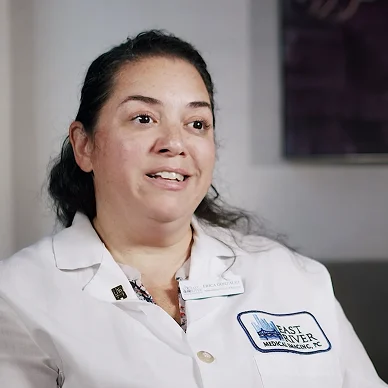
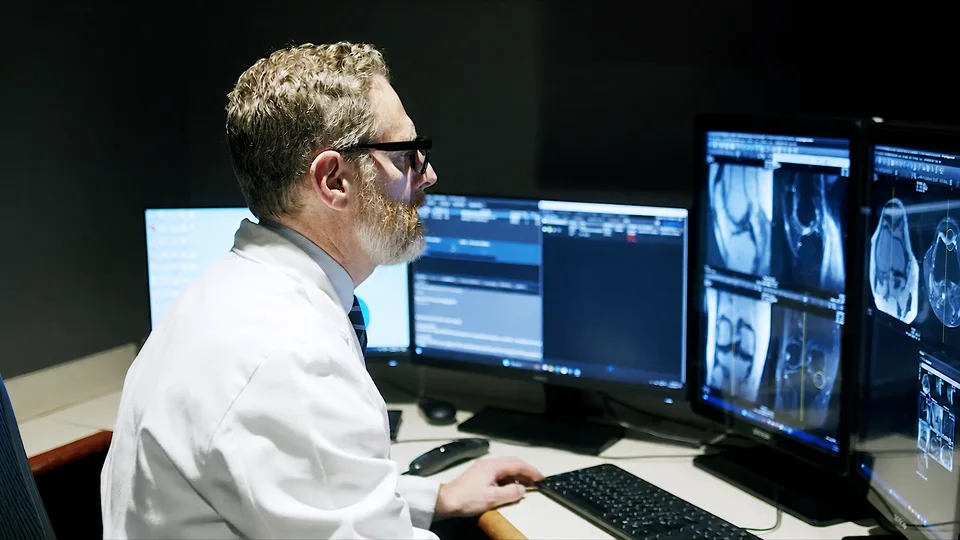
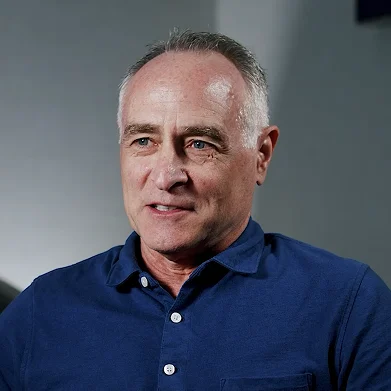
Dr. Timothy Deyer, lead technologist Mike Fazio, administrative director Erica Gonzalez, and a patient on what changed at East River Medical Imaging.
Located in Manhattan and Westchester County, East River Medical Imaging is a respected leader in diagnostic imaging, known for a patient-first approach and for adopting new technology early. When AI reconstruction for MRI arrived, the practice moved quickly. It had a specific list of problems to solve.
East River Medical Imaging serves Manhattan and Westchester County, New York.
Lengthy scans were a barrier for patients with claustrophobia, anxiety, and pain. Backlogs wore down technologists, who had to navigate operational delays and manage frustrated patients. In the aftermath of Covid-19, there were not enough techs to handle the work. And with inflation driving up operating costs, pressure mounted to grow revenue without compromising care.
Radiology practices are facing a lot of difficult decisions. Costs are going up, so you need to think creatively.
The goal was concrete: get a standard scan from 30 minutes down to 20, so each scanner could serve three patients per hour instead of two. The question was which AI solution could actually deliver it.
East River Medical Imaging is methodical about new technology. Before SwiftMR, the practice put two other MRI acceleration products through real clinical use to see how each held up in day-to-day operations.
The first integrated directly into the scanner. It looked good in the control room but barely moved the number that mattered. “We were able to see the scans as they were going,” said Mike Fazio, the practice’s lead MRI technologist, “but it didn’t really cut time off the scanning.” It also could not help the practice’s older magnets, which still did good clinical work but had no upgrade path.
The second sent images to a server for processing, and the time savings were real. The workflow was not. Technologists could not take a patient off the table until the processed images came back from the server, so the time saved in acquisition was lost to waiting, with the patient still in the bore. For a practice trying to tighten its schedule, a delay at exactly that moment was disqualifying.
Neither product was a bad idea. They were incremental, and East River Medical Imaging needed more than an increment: a solution that cut acquisition time, worked across every scanner in the fleet regardless of age or vendor, and stayed out of the technologists’ way.
You couldn’t take the patient off the table until you saw the return image. The kickback from the server was untenable.
Patients accommodated in an 8-hour window
Patient backlogs since implementation
SwiftMR fits into the existing route between the scanner and PACS: studies are sent for AI reconstruction and the finished images return to the PACS worklist on their own, so technologists have nothing new to operate. And unlike the server-based product the practice had tried, it never holds a patient on the table waiting for a result. By the time one patient is off the scanner, the reconstructed images are already there.
East River Medical Imaging installed it across its scanners, old and new. “We worked together as a team to install the new protocols,” said Erica Gonzalez, Administrative Director of Radiology. “Our patients were none the wiser. And before you knew it, we were scanning our spines in 10 minutes.”
Scan times fell by up to 36%, and an 8-hour window that used to hold 16 patients now holds 24. The backlog that had been wearing down staff disappeared.
The speed has made the practice a go-to resource for referrals. “We have doctors who can’t get their patients into various hospitals or imaging centers,” said Dr. Deyer. “Because we’re quicker than before, we can usually eke out a bit of time to see someone during the day.”
Dr. Deyer reviews studies on a GE Signa EXCITE 1.5T. Shorter acquisitions keep the schedule moving, freeing time for referrals and emergency add-ons.
Mike Fazio has been with the practice for 14 years, and much of the job is reading people. He and his fellow technologists frequently scan patients with claustrophobia, anxiety, pain, and other conditions that make MRIs difficult. “We read their stress level,” he explained. Before SwiftMR, scheduling delays and lengthy procedures frustrated patients who were already wary of entering the scanner. “Now we can tell a lot of them, you’re only going to be in there for 10 or 20 minutes.”
Michael, a 62-year-old Manhattan resident and avid runner, is one of those patients. Suffering from claustrophobia, he had dreaded MRIs for years. “I’ve had instances where I asked to be taken out,” he said. “I’ve had to take medication to relax.” His apprehension sometimes kept him from care entirely: “There were times I should have gotten an MRI but didn’t.”
His lower-back scan at East River Medical Imaging went differently. “The fact I was in and out in 10 minutes felt like a miracle,” he remarked. “I’m not so fearful to get an MRI. It changed the whole experience for me.”
The same shift shows up on the other side of the glass. “We’re drastically improving scan times, which enhances patients’ moods,” Fazio said. As a result, “we’re seeing better tech satisfaction.”
The results were not confined to one machine. East River Medical Imaging measured scan-time reductions across MRI procedures on multiple scanner brands and field strengths, including a low-field Hitachi that no OEM upgrade would touch.
GE Signa EXCITE 1.5T, measured protocol times
The Hitachi AIRIS ELITE runs at 0.3 Tesla, the kind of aging low-field magnet many practices assume is beyond help. It saw some of the largest absolute time savings of any scanner in the fleet: a T-spine that took nearly an hour now takes 32 minutes.
Hitachi AIRIS ELITE 0.3T, measured protocol times
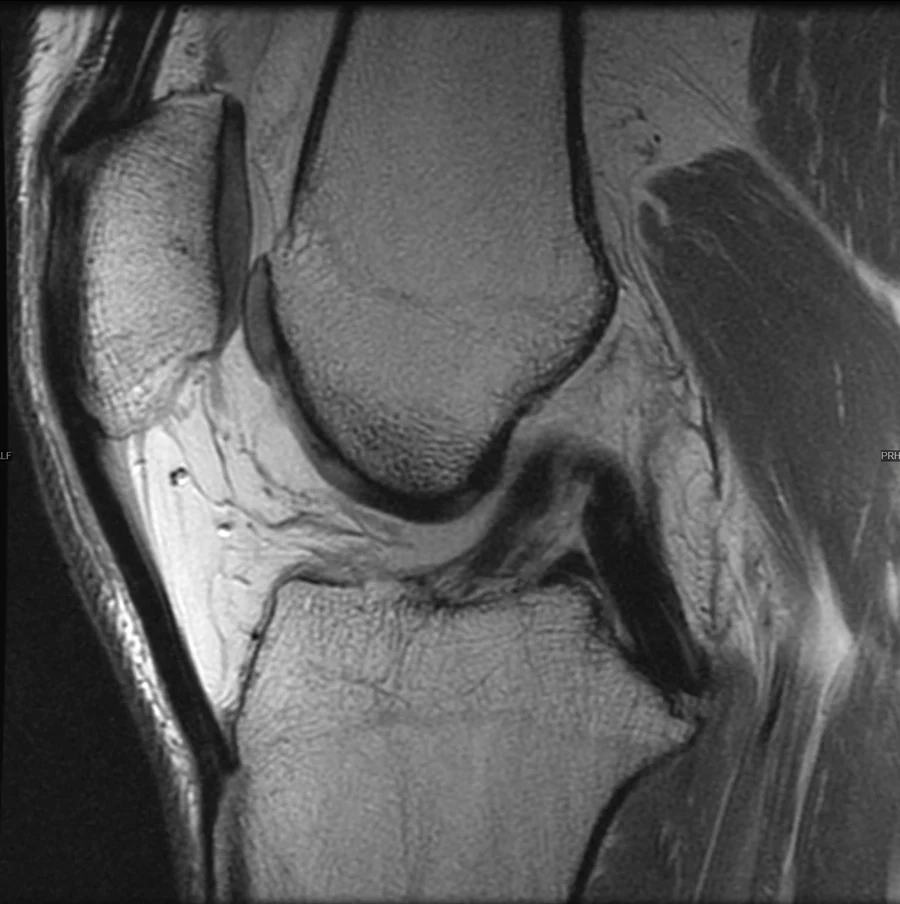
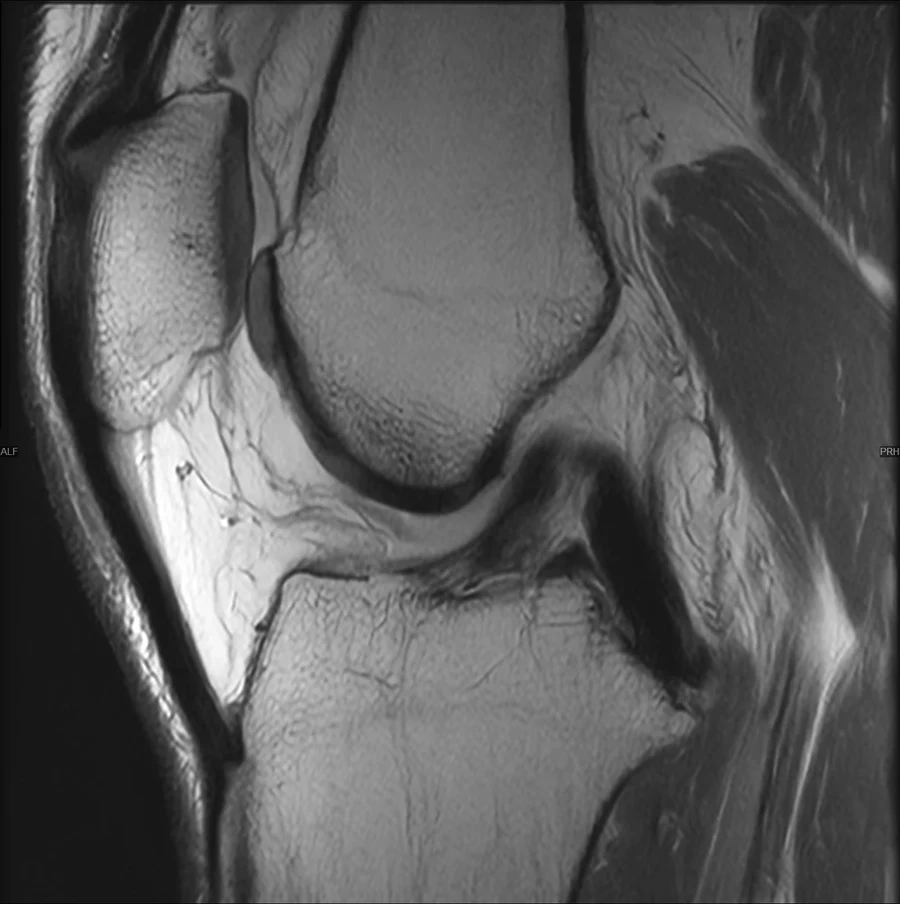
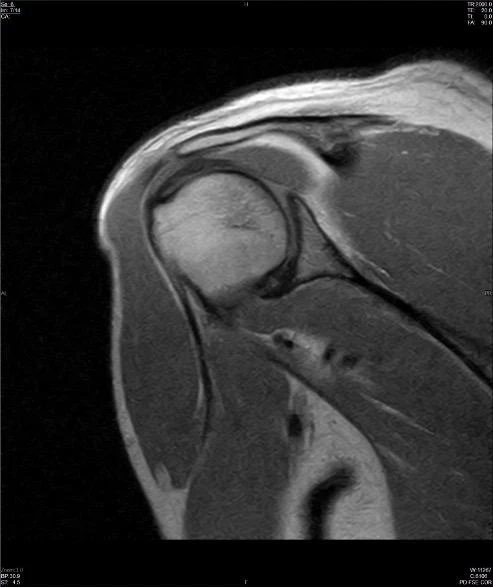
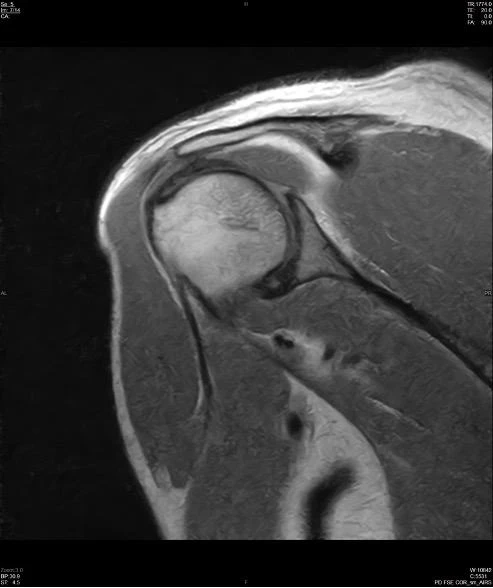
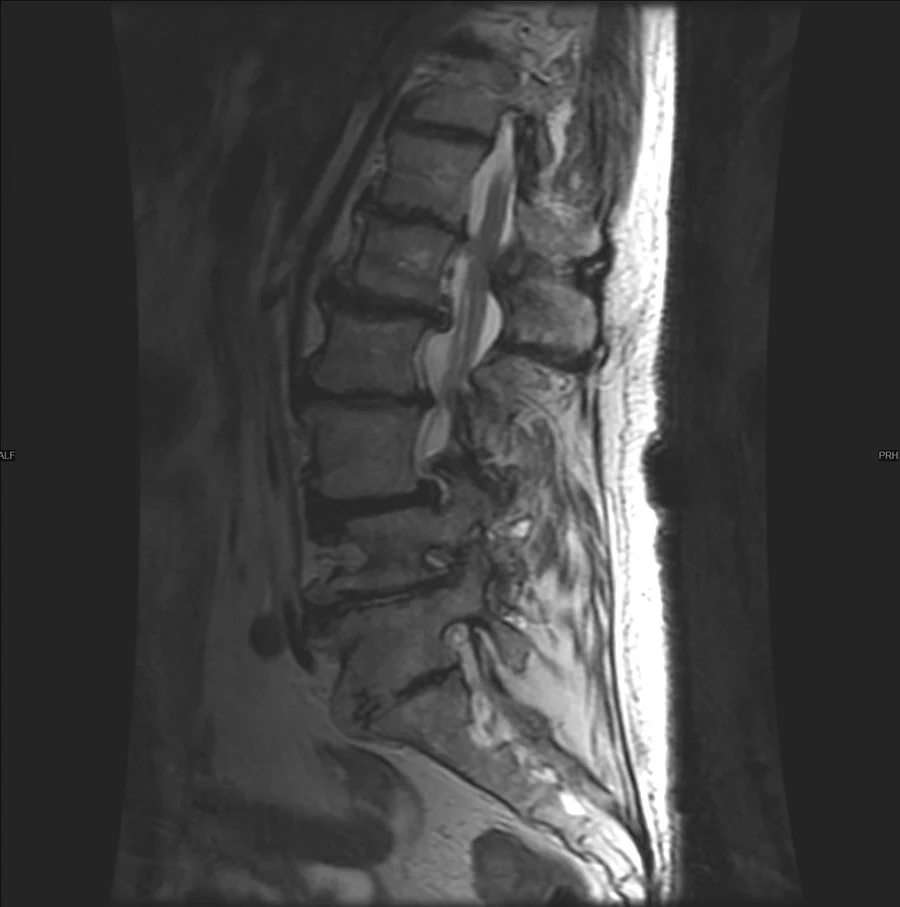
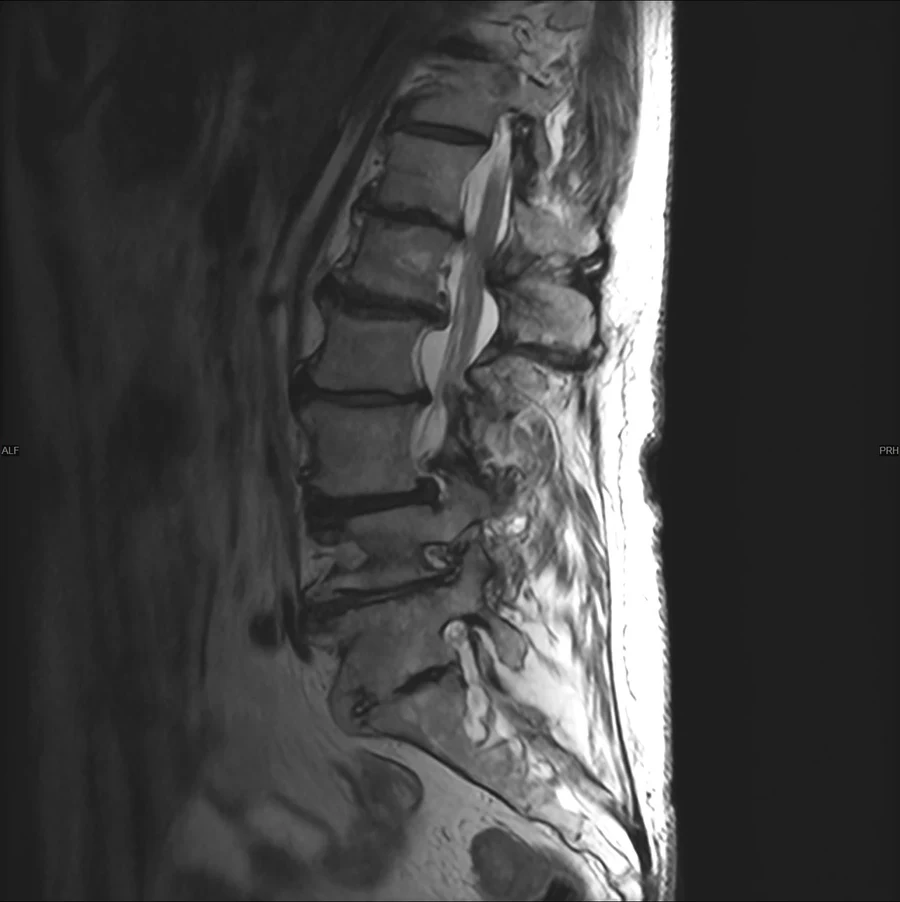
Faster acquisition mattered only because the images held up. “The post-process Swift scans look very clean,” said Fazio, “but the time difference is 40 to 50 percent on some of the scans.” The pairs below show the same sequences acquired conventionally and with SwiftMR, including one from the 0.3T Hitachi.
Knee SAG PD · GE Signa EXCITE 1.5T66% faster
Coronal PD Shoulder · Hitachi AIRIS ELITE 0.3T56% faster
Lumbar SAG T2 · GE Signa EXCITE 1.5T28% faster
“For most of our cases, we’re going from a 30-minute time slot to 20,” said Dr. Deyer. “That’s allowing us to scan more patients per hour on each machine.” And the gain is flexible: “Even if we’re not scanning more patients, we’re giving techs a break between studies or opening up a time slot for emergency add-ons.”
The schedule bends instead of breaking. “If a patient moves around or shows up late, it’s not causing such a disruption,” explained Gonzalez. For a practice that had already tried two AI solutions, the third one changed what the whole fleet, from the newest 1.5T to a 0.3T low-field magnet, could deliver.
Every scanner, protocol, and workflow is different. Tell our team about your fleet and evaluate SwiftMR on your own images, the way East River Medical Imaging did.
Testimonials and results reflect East River Medical Imaging’s measurements, based on data from a single location. Individual results vary by scanner, sequence, and protocol.
SwiftMR is FDA 510(k)-cleared in the United States to support images with scan time reduction by up to 50%.
“Radiology practices are facing a lot of difficult decisions. Costs are going up, so you need to think creatively.Timothy Deyer, MD, Chief Medical Information Officer
“As soon as one patient is on the table, the tech is getting the next patient. We can move through our schedule quickly.”Erica Gonzalez, Administrative Director of Radiology
“I honestly can’t believe I’m saying the MRI experience was a 10, but it really was that good.”Michael, Patient
“If you have a chance to implement SwiftMR, I don’t see any reason why you wouldn’t. It’ll make your staff happier and your patients happier, which means the work will be better.”Mike Fazio, Lead MRI Technologist
| Scan type | Before | After | Reduction |
| Hip | 23:28 | 10:52 | 54% |
| L-Spine | 19:12 | 10:30 | 45% |
| C-Spine | 16:28 | 9:53 | 40% |
| T-Spine | 27:56 | 17:49 | 36% |
| Tibia/Fibula | 28:08 | 18:07 | 36% |
| Knee | 11:50 | 8:24 | 29% |
| Brain (routine) | 28:21 | 20:34 | 27% |
| Shoulder | 12:24 | 9:53 | 20% |
| Protocol | Before | After | Reduction |
| L-Spine · Neuro | 35:07 | 19:14 | 45% |
| T-Spine · Neuro | 56:27 | 32:22 | 43% |
| C-Spine · Neuro | 56:25 | 33:00 | 42% |
| Knee · MSK | 39:54 | 24:42 | 38% |
| Orbits · Neuro | 43:19 | 29:55 | 31% |
| Shoulder · MSK | 40:08 | 28:55 | 28% |
| Pituitary · Neuro | 33:08 | 25:38 | 23% |
| Hip · MSK | 54:12 | 42:35 | 21% |
| Brain · Neuro | 38:57 | 32:05 | 18% |
| Soft Tissue Neck · Neuro | 45:03 | 37:02 | 18% |
| Sacrum · Neuro | 43:25 | 36:22 | 16% |
| IACs · Neuro | 34:16 | 28:50 | 16% |
| Pelvis · MSK | 45:32 | 39:46 | 13% |
| Female Pelvis · MSK | 59:59 | 51:55 | 13% |