SwiftSightBody Composition
Turn MRI into a New Quantitative Body Composition Service
SwiftSight helps imaging providers add AI-powered body composition analysis to existing whole-body, preventive imaging, healthy-aging, weight-management, or wellness programs, creating a differentiated service and a new revenue opportunity from MRI already in your workflow.
Go Beyond Conventional Body Composition Assessments
Body composition can be assessed in several ways. The difference is what each modality can measure and how easily it can be used to follow patients over time. SwiftSight, with one non-invasive MRI exam, provides multiple quantitative measures of metabolic and musculoskeletal health reference points.
DEXA
Fast, established body composition method
More limited assessment of visceral and intramuscular fat
Possible, with radiation exposure
CT
High-resolution anatomical detail
Radiation limits suitability for frequent longitudinal assessment
Less suited to frequent repeat assessment
MRI with SwiftSight
AI-powered quantitative analysis
Detailed soft-tissue characterization
Muscle quantity and quality, visceral and subcutaneous fat, liver fat, muscle balance
Supports repeat quantitative assessment without ionizing radiation
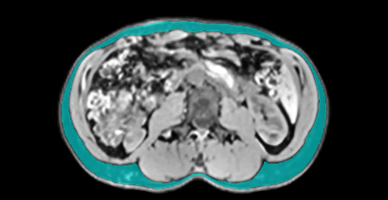
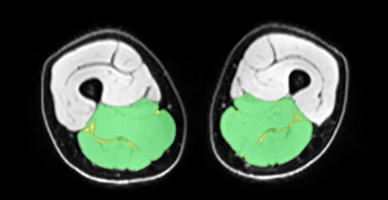
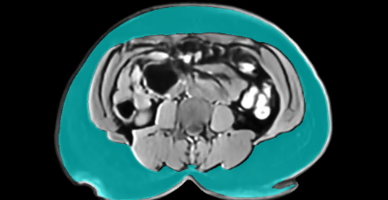
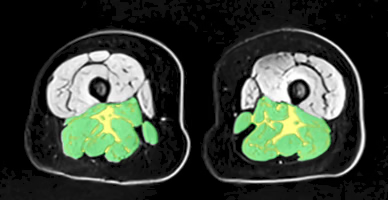
Same Age. Same BMI. Different Body Composition.
The value of SwiftSight’s tissue-specific analysis becomes clear in patients who appear similar by conventional measures.
Despite the same age and BMI, SwiftSight reveals markedly different adipose distribution and muscle composition, quantifying those differences to provide objective measurements for patient-specific assessment and longitudinal tracking.
Patient A
Patient B
Assess Hidden Metabolic Risks BMI Can’t Show
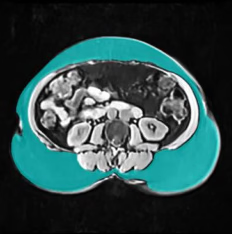
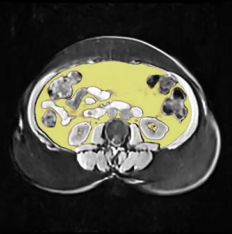
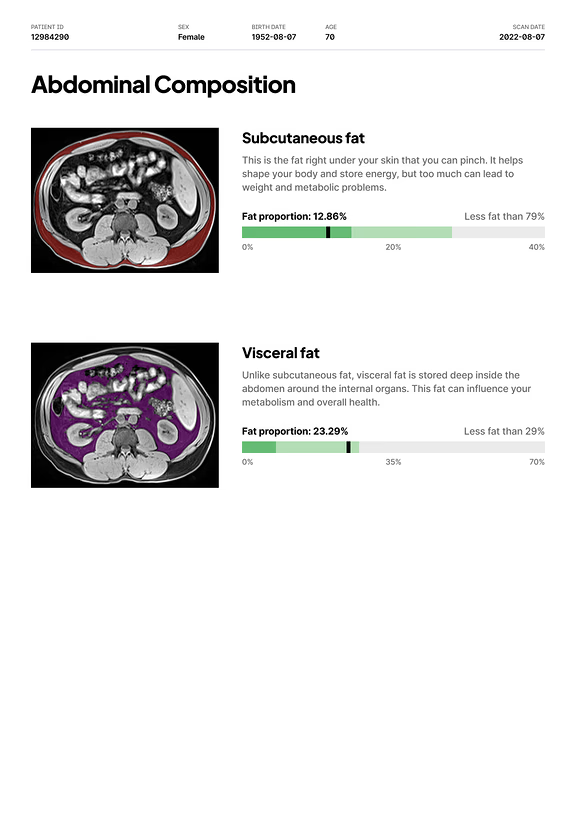
Subcutaneous fat sits beneath the skin, while visceral fat is stored deeper in the abdomen around the internal organs. These two fat compartments can have very different implications for metabolic health, even in patients with a similar weight or BMI.
SwiftSight automatically separates and quantifies visceral and subcutaneous fat, reporting both the measured proportion and how the patient compares with an age- and sex-matched population. This provides a more meaningful view of abdominal adiposity and a quantitative baseline that can be followed over time.
Age range 70–74 · Female · 5'0".
More Than a Body Fat Percentage
SwiftSight provides an integrated view of the measurements that matter across metabolic health, muscle health and body composition.
Automated Analysis
AI-driven segmentation analyzes MRI data and produces quantitative results without requiring manual measurement.
Comprehensive Assessment
Bring together visceral fat, subcutaneous fat, abdominal muscle, thigh muscle, muscle quality, muscle balance and liver fat within one body composition assessment.
Patient Benchmarking
Measurements are placed in context using age- and sex-matched reference populations, so that a number is more than just a number.
Longitudinal Tracking
MRI does not use ionizing radiation, making repeat assessment practical for tracking changes in body composition over time.
One Solution. Multiple Clinical Applications.
Metabolic Screening
Assess visceral adiposity, liver fat and muscle quality to provide a more complete picture of metabolic health than weight or BMI alone.
Healthy Aging
Track muscle proportion, muscle quality and fat infiltration to identify changes associated with aging and loss of muscle efficiency.
Weight Management
Measure changes in fat while monitoring whether lean muscle is being preserved during lifestyle, medical or weight-management interventions.
Rehabilitation
Evaluate muscle proportion, quality and bilateral balance to support assessment of recovery and physical performance.
Add Body Composition to Your Existing Workflow
SwiftSight is designed to add quantitative body composition to the MRI workflow your imaging center already operates, without introducing another imaging modality or sending patients into a separate body composition experience.
Use your Existing MRI Workflow
Add body composition to an established whole-body MRI, preventive imaging, or wellness program, or use it as the foundation of a new quantitative MRI service.
MRI is Acquired
The required abdomen, liver, and thigh imaging is acquired as part of the body composition examination.
SwiftMR® can be incorporated to support faster acquisition where appropriate.
SwiftSight Automatically Analyzes the Images
AI-powered segmentation identifies and quantifies relevant muscle and fat compartments.
A Quantitative Body Composition Report is Generated
Body composition measurements, visualizations, and benchmarking are compiled into a structured report.
Results Become Part of the Patient Conversation
Clear quantitative measurements can support consultation, care recommendations, and referral pathways within the imaging provider’s existing clinical model.
Bring the Patient Back to Measure Change
Repeat MRI assessment can show how body composition changes over time, supporting annual wellness and longitudinal follow-up.
One Report for Multiple Dimensions of Body Composition
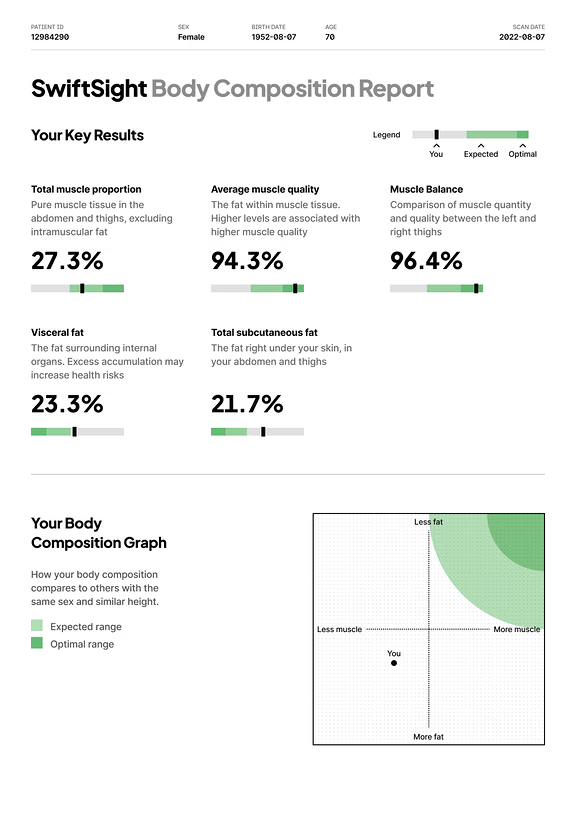
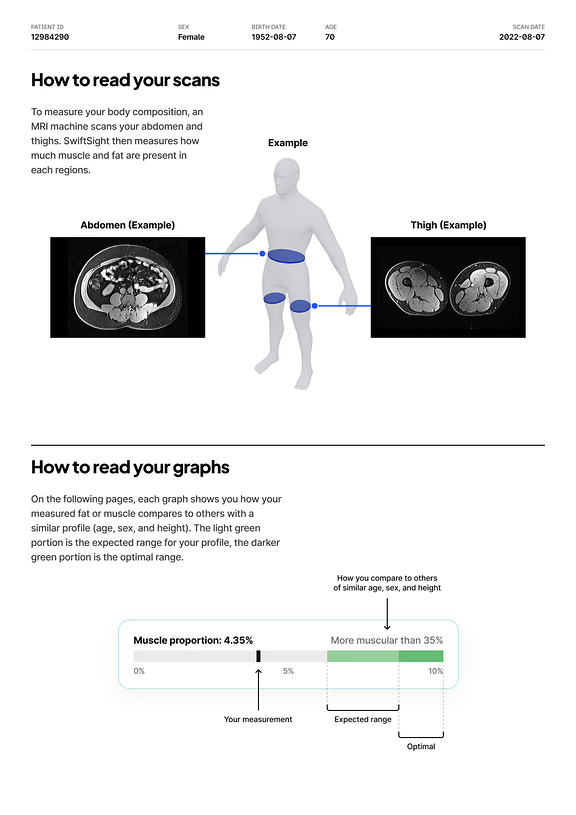
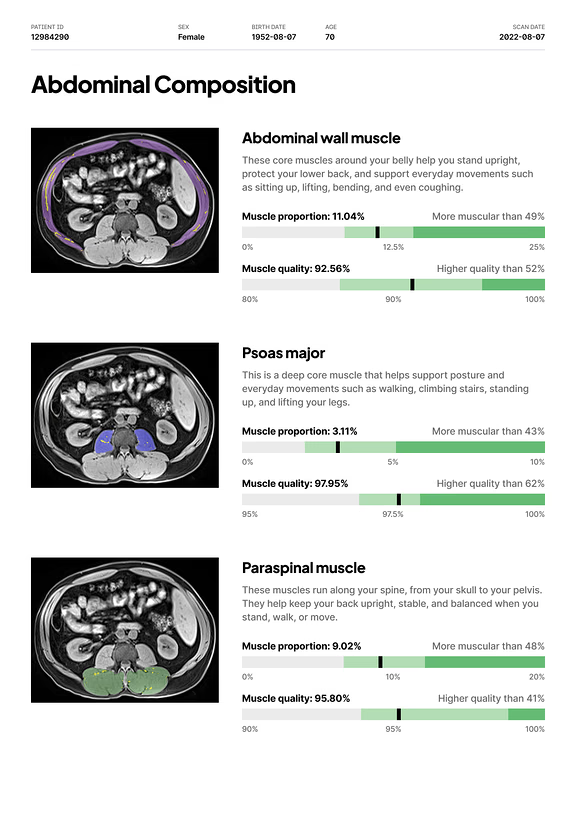
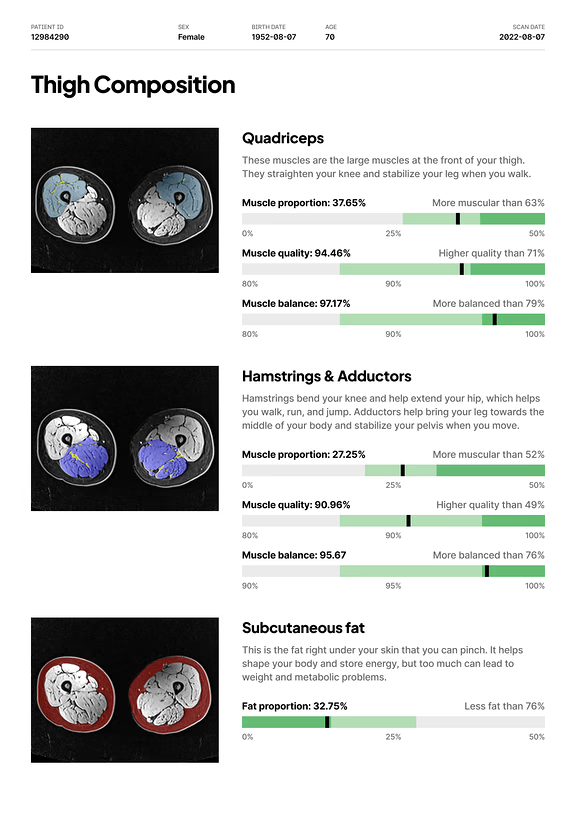
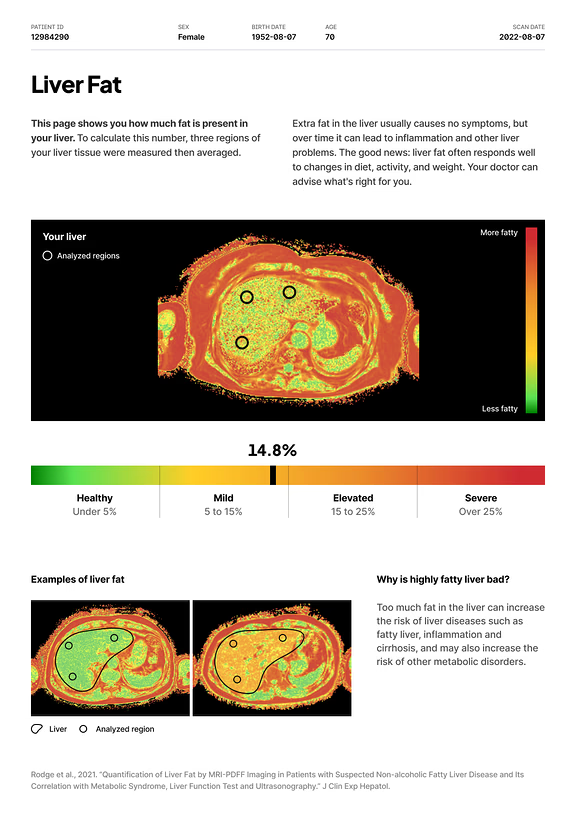
SwiftSight converts complex body composition measurements into a structured visual report designed to make quantitative information easy to understand.
Rather than delivering isolated numbers, the report combines quantitative measurements, reference ranges, percentile information and annotated MRI images to show patients what was measured and how their results compare over time.
Example report, synthetic patient data.
Expand MRI Into a New Revenue Opportunity
Whole-body and preventive MRI programs are evolving beyond structural imaging as patients and referring providers seek quantitative information they can understand and follow over time.
SwiftSight adds quantitative body composition analysis and reporting to the MRI services imaging providers already offer, without introducing another imaging modality.
Use it to enhance an existing whole-body or preventive MRI program, support longitudinal wellness and weight-management services, or launch a new body composition offering across your imaging network.
See how 3T Radiology & Research brought whole-body MRI in-house and built a premium patient experience.
Frequently Asked Questions
SwiftSight quantifies visceral and subcutaneous fat, abdominal and thigh muscle proportion, muscle quality, bilateral muscle balance, and liver fat. Results are combined into a structured body composition report with visual interpretation and peer benchmarking.
SwiftSight analyzes defined MRI images of the abdomen, thighs, and liver. Within these regions, it measures key fat and muscle compartments, including abdominal wall, psoas, paraspinal, quadriceps, hamstrings and adductors.
Weight and BMI do not show how fat and muscle are distributed. SwiftSight provides quantitative information about visceral fat, subcutaneous fat, muscle amount, muscle quality, muscle balance, and liver fat, helping distinguish patients who may have similar weight or BMI but very different body composition profiles.
SwiftSight measures intramuscular fat infiltration, or myosteatosis, within analyzed muscle groups. Lower fat infiltration corresponds with higher muscle quality, allowing muscle composition to be evaluated alongside muscle proportion.
SwiftSight separates abdominal adipose tissue into visceral fat, which is located deeper around the internal organs, and subcutaneous fat, which lies beneath the skin. Each can be quantified independently rather than being combined into a single body-fat measurement.
Yes. SwiftSight uses proton density fat fraction, or PDFF, to quantify liver fat. The software analyzes three regions of interest, calculates an average liver fat fraction, and provides a visual color map alongside the quantitative result.
SwiftSight generates a visual Body Composition Report summarizing key measurements such as muscle proportion, muscle quality, muscle balance, visceral fat, subcutaneous fat, and liver fat. Additional report pages show the analyzed anatomy and provide more detailed abdominal, thigh, and liver measurements.
SwiftSight compares measurements with reference populations matched by age and sex. Percentiles and visual expected and optimal ranges help providers and patients understand where an individual measurement sits relative to comparable people.
Yes. Because the measurements are quantitative, repeat MRI assessments can be used to evaluate changes in fat distribution, muscle composition, muscle quality, balance, and liver fat over time.
The capabilities can support metabolic assessment, healthy-aging programs, weight-management programs, rehabilitation, preventive imaging, and whole-body MRI services.
MRI does not use ionizing radiation and provides detailed soft-tissue visualization, allowing fat, muscle, and liver composition to be assessed within the same imaging-based body composition program.
Body composition can be incorporated into an existing whole-body, wellness, or preventive MRI program or used as part of a new service. MRI data are analyzed by SwiftSight, quantitative results are generated, and the resulting report can be incorporated into the center’s existing patient consultation and follow-up workflow.
Yes. SwiftMR can be integrated with the workflow to accelerate MRI acquisition while providing imaging data for SwiftSight quantitative analysis.
Scale Body Composition Across Your Network
Add quantitative body composition to your imaging network with automated analysis, patient reporting, peer benchmarking, and longitudinal tracking, without adding another imaging modality.